
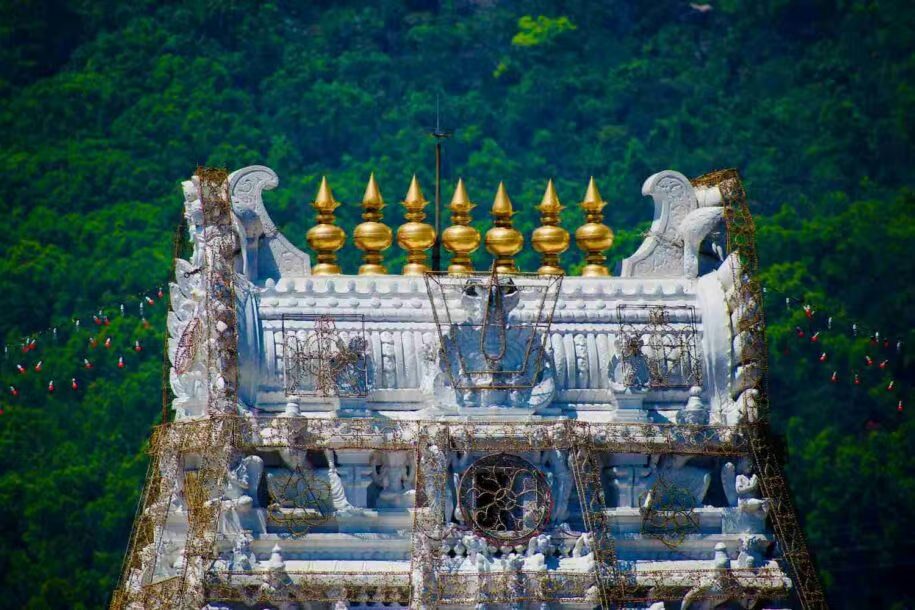
Every single day, without exception, 100,000 people climb the Tirumala Hills in Andhra Pradesh to stand before Lord Venkateswara.
Not during festivals. Not during special occasions. Every ordinary day of every ordinary week of every ordinary year, one hundred thousand human beings make the journey to the most visited pilgrimage destination on earth.
The Vatican receives approximately 9 million visitors annually. The Tirupati Balaji temple receives between 50,000 and 100,000 devotees every single day. On major festival days the number exceeds 500,000. The annual figure approaches 40 million.
No religious site on earth receives more human beings in devotion than the Sri Venkateswara Swami Temple at Tirumala.
And the wealth that those devotees bring with them, in cash offerings, gold, jewellery and the extraordinary tradition of hair donation that generates millions of rupees daily from the international human hair trade, has made the Tirumala Tirupati Devasthanams, the trust that manages the temple, one of the wealthiest religious institutions in human history, with assets estimated at over three lakh crore rupees.
This is the Tirupati Balaji temple tour. And the story behind those numbers is one of the most extraordinary in all of Hindu sacred geography.
Tirupati Balaji Temple Tour: The Story of Lord Venkateswara and Why He Chose These Seven Hills
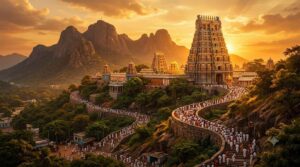
Lord Venkateswara and the Divine Debt Behind Every Tirupati Balaji Temple Tour
Lord Venkateswara is a manifestation of Lord Vishnu, the preserver in the Hindu divine trinity. But his story at Tirumala is completely specific to this place and this sacred landscape. It is a story of divine love, cosmic debt and the extraordinary devotion of a god who borrowed money from another god to marry his beloved and is still repaying the debt.
The legend holds that Lord Vishnu descended to earth in the form of Venkateswara and fell in love with Padmavati, a princess who was a manifestation of Goddess Lakshmi. To marry her he needed money for the wedding ceremonies. He borrowed a vast sum from Kubera, the god of wealth, with a promise to repay it with interest until the end of the current cosmic age, the Kali Yuga.
The money has not yet been repaid. And every offering made by a devotee on a Tirupati Balaji temple tour, every rupee dropped into the hundis, every gram of gold offered, every lock of hair donated, is understood in the devotional tradition as a contribution toward Lord Venkateswara’s debt repayment to Kubera.
This is why the offerings never stop. The debt is vast. The interest accumulates. And the devotion of millions of pilgrims across centuries has been the mechanism by which their beloved deity is slowly, extraordinarily slowly, working his way toward settling his divine account.
For NRI families joining a Tirupati Balaji temple tour, this story carries a specific and deeply personal resonance. The idea of a god who took on debt for love, who is working through his obligations with the help of his devotees, who accepts every contribution however small as part of a cosmic repayment plan, speaks directly to the experience of families who have themselves worked across generations to build a life away from home and who understand the weight of obligation and the power of collective effort.
The Seven Sacred Hills Every Tirupati Balaji Temple Tour Must Climb
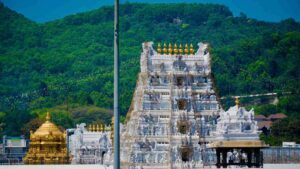
The Sri Venkateswara Swami Temple sits at an altitude of 853 metres on Venkata Hill, one of the seven peaks of the Tirumala Hills in Andhra Pradesh. The seven peaks are believed to be the seven hoods of Adishesha, the cosmic serpent on whom Lord Vishnu eternally rests. The hills themselves are therefore not merely a beautiful natural landscape. They are the body of the divine serpent, the very couch of the cosmic preserver, and the temple sits at their heart as the dwelling place of the deity who rests upon them.
The climb to the temple, whether by foot along the ancient pilgrim path or by road in the temple trust’s buses, takes pilgrims through this sacred landscape with a growing awareness of its theological meaning. The forests that cover the hillsides are protected as part of the Sri Venkateswara National Park. The wildlife, including sloth bears, leopards, pangolins and hundreds of bird species, shares the sacred geography with the millions of human pilgrims who pass through every year.
The fourteen kilometre pedestrian path from Alipiri at the base to the temple complex at the summit has been walked by pilgrims for over a thousand years. Walking it barefoot, as tradition requires, is one of the most physically demanding and most spiritually rewarding acts of devotion available on any Tirupati Balaji temple tour.
The Hair Offering Tradition on Your Tirupati Balaji Temple Tour: A Devotion Like No Other
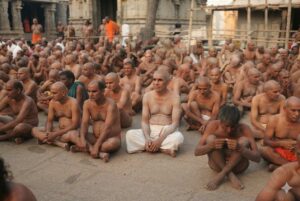
The tonsure tradition at Tirupati, the offering of one’s hair to Lord Venkateswara, is one of the most extraordinary and completely unique devotional practices you will witness on any temple tour anywhere on earth.
Devotees shave their heads at the Tirupati Balaji temple as an act of surrendering their ego and their vanity to the divine. The hair, which in Indian cultural tradition is associated with beauty, status and identity, is offered as a symbol of the devotee’s complete submission to Lord Venkateswara.
The practical consequence of this extraordinary act of collective devotion is that the Tirumala Tirupati Devasthanams processes and auctions approximately 800 tonnes of human hair every year, generating revenue of several hundred crore rupees annually from the international human hair trade. The hair of Tirupati devotees becomes the raw material for wigs, hair extensions and beauty products sold globally, completing an extraordinary cycle in which the devotion of Indian pilgrims fuels a global beauty industry whose customers are almost entirely unaware of the sacred origin of the hair they are wearing.
Our Tirupati Balaji temple tour with 5 Senses Tours includes expert cultural guides who explain the complete theological and practical dimensions of the hair offering tradition, giving international visitors the full context that transforms a striking visual sight into a genuinely meaningful encounter with one of the most powerful devotional practices in the Hindu world.
The Tirupati Balaji Temple Tour Experience: What Happens Inside
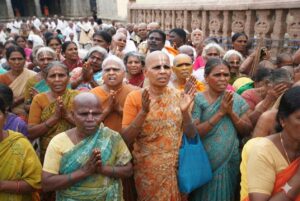
Inside the Sanctum: The Darshan Experience on a Tirupati Balaji Temple Tour
The Special Entry Darshan at Rs 300 is the most popular and in demand darshan ticket for Tirupati Balaji Temple. For NRI devotees, the TTD provides a specific NRI darshan facility that ensures a comfortable and spiritually fulfilling pilgrimage experience with dedicated queues and facilitated access.
The inner sanctum of the Venkateswara temple houses one of the most extraordinary sacred images in Hinduism. The deity is adorned with golden ornaments of extraordinary value and intricacy, with specific jewels and crowns associated with the donations of different historical rulers and devotees. The darshan itself is brief by necessity given the volume of pilgrims, but the moment of standing before the deity, having climbed the sacred hills and waited through the pilgrimage process, carries a concentrated devotional intensity that devotees consistently describe as one of the most powerful spiritual experiences of their lives.
The Prasadam Laddu: The Sacred Sweet of Every Tirupati Balaji Temple Tour

No Tirupati Balaji temple tour is complete without the celebrated Tirupati laddu, the sacred sweet prasadam that every visitor receives after darshan. This laddu has been made continuously at the Tirumala temple since at least the 18th century, using a recipe that has not changed significantly in that time. It is made from chickpea flour, sugar, cashews, raisins and ghee, in quantities so vast that the temple’s kitchen operates around the clock processing the ingredients for 100,000 daily offerings.
The Tirupati laddu carries a GI tag, the same protected geographical indication status as Darjeeling tea and Channapatna toys, certifying that the authentic version can only be produced within the Tirumala temple complex. Receiving the laddu in the palm of your hand as you exit the darshan is one of the most intimate and most universally beloved moments of the entire Tirupati Balaji temple tour.
Plan Your Tirupati Balaji Temple Tour With 5 Senses Tours
How to Book Darshan Online for Your Tirupati Balaji Temple Tour
The Tirumala Tirupati Devasthanams releases Special Entry Darshan tickets through its official online booking portal at ttdsevaonline.com, with general temple information and protocols published on the trust’s main site at tirumala.org. Booking typically opens through a periodic quota release, historically on Sunday mornings, for slots roughly one to two months ahead, and every applicant must register with a valid identification document, a passport for NRI pilgrims or an Aadhaar card for Indian residents.
Because the online release covers only a fraction of the 100,000 pilgrims seeking darshan each day, the available slots are typically claimed within minutes of release. Please treat the portal address above as a starting point and confirm the current booking window and requirements directly on the official TTD site before your visit, since government booking systems are updated periodically.
Our Tirupati Balaji temple tour secures these online slots on behalf of our guests wherever the quota allows, and arranges accredited alternative access where it does not, so that your family’s visit is confirmed well ahead of arrival rather than left to chance.
Planning Your Tirupati Balaji Temple Tour Around Limited Ticket Availability
Tickets for the Tirupati Balaji temple tour are genuinely difficult to secure independently. The daily allotment for the Rs 300 Special Entry Darshan is a small fraction of total pilgrim demand, the free Sarva Darshan queue can run anywhere from twelve to twenty hours during peak season, and the online quota is typically exhausted within moments of release each week.
For this reason, we recommend planning your Tirupati Balaji temple tour at least four to six weeks in advance wherever possible. Travelling during the comfortable October to March season, while avoiding the Brahmotsavam festival period in September if you prefer smaller crowds, also improves the overall experience considerably. Building one additional flexible day into your itinerary is a wise precaution in case your preferred darshan slot shifts.
NRI Darshan Facilities on Your Tirupati Balaji Temple Tour
The Tirumala Tirupati Devasthanams has introduced several dedicated services for Non Resident Indians to ensure a smooth and spiritually fulfilling pilgrimage.
NRI darshan at Tirupati requires a valid passport and proof of NRI status. The TTD NRI darshan counter provides facilitated access with shorter queuing times than the general darshan.
Best Time to Visit and How to Reach Tirupati on a Tirupati Balaji Temple Tour
The best time for the Tirupati Balaji temple tour is October to March, when the Andhra Pradesh weather is comfortable and the hillside atmosphere is pleasant. The Brahmotsavam festival, which occurs in September, is the most significant annual celebration and draws the largest crowds of any period in the year.
Tirupati is accessible by air with direct flights from all major Indian cities to Tirupati Airport, while Renigunta Airport and Chennai’s international airport, roughly three hours away by road, also serve as convenient gateways for overseas visitors. The railway station at Tirupati town is well connected to Chennai, Hyderabad, Bengaluru and all major South Indian cities. Every arrangement on a Tirupati Balaji temple tour with 5 Senses Tours, from station or airport transfer to darshan booking to hillside accommodation, is planned around your comfort so the journey up the seven hills feels like a pilgrimage, not a logistics exercise.
Extend Your South India Sacred Journey With 5 Senses Tours
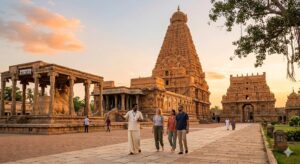
The Tirupati Balaji temple tour pairs naturally with the extraordinary Chola temple heritage of Tamil Nadu. Our Chola temples tour from Chennai covers the three UNESCO World Heritage Brihadeeswara temples in a two day journey through the most extraordinary Dravidian temple architecture in India.
Our Varanasi tours connect the South India sacred experience to the oldest living city on earth. Our Bodhgaya tours extend the sacred India journey into the Buddhist heartland of Bihar. And our complete portfolio of India pilgrimage tours covers the full spectrum of India’s extraordinary sacred geography, from Tirupati to Deoghar to Bodhgaya to Varanasi.
Book your Tirupati Balaji temple tour with 5 Senses Tours today