

The Whispers of a Sunken Path
India, a land steeped in ancient lore and profound mysteries, holds countless wonders that beckon travelers and scholars alike. Among these, few capture the imagination as powerfully as the Ram Setu, a name that echoes through millennia of myth and modern scientific inquiry. Also known as Adam’s Bridge, this remarkable geological feature stretches across the Palk Strait, its very existence shrouded in a tantalizing mystery that has fascinated generations. Is this remarkable formation a marvel of natural geological processes, or does it bear the indelible mark of an ancient, colossal human, or even divine, endeavor? This duality is the core of its enduring allure.
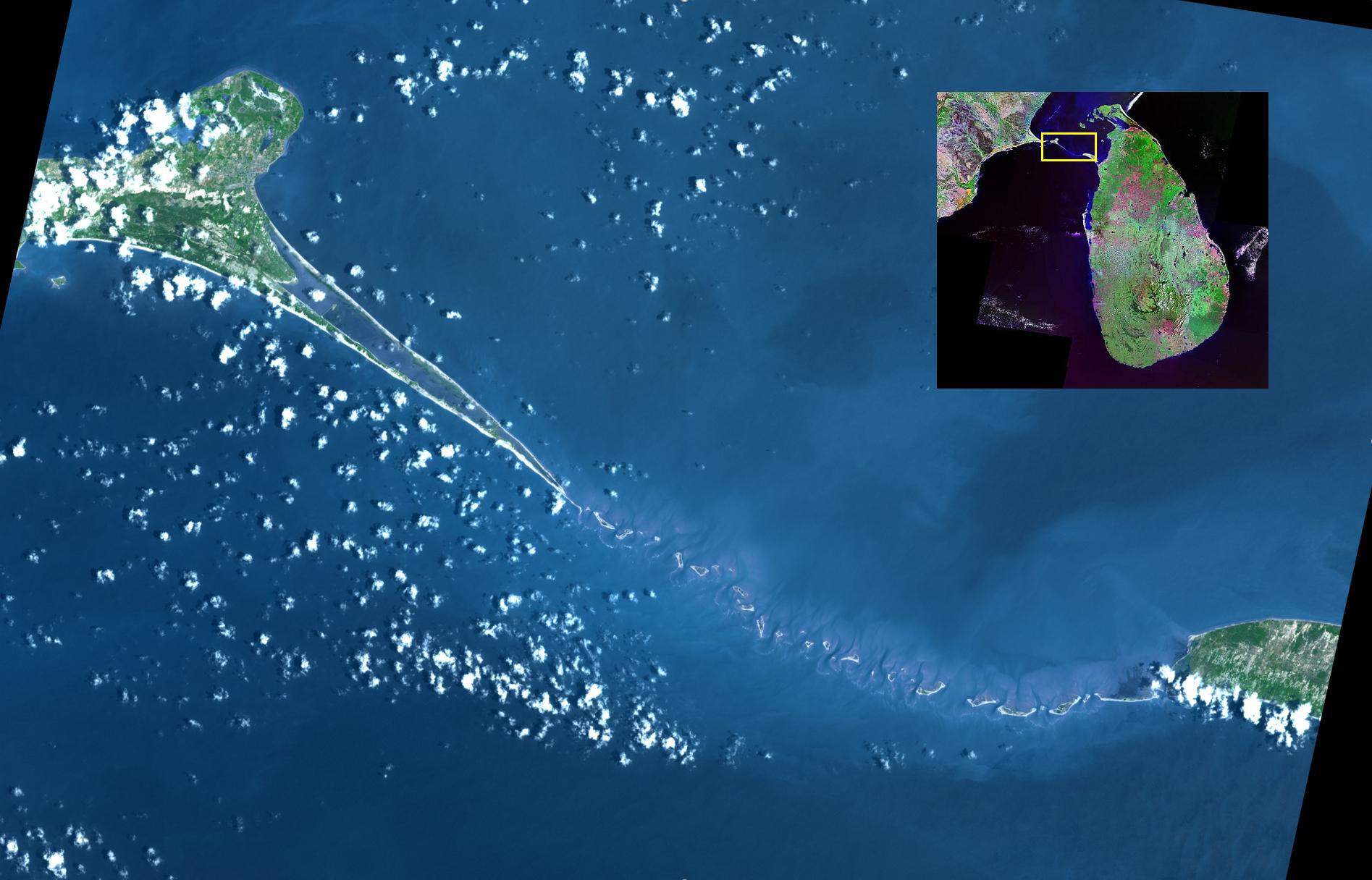
Geographically, the Ram Setu forms a distinct chain of natural limestone shoals, connecting Pamban Island, also known as Rameswaram Island, off India’s southeastern coast to Mannar Island off Sri Lanka’s northwestern coast. This feature spans approximately 48 kilometers (30 miles) and effectively separates the Gulf of Mannar to the southwest from the Palk Strait to the northeast. The shallow waters, typically only 1 to 3 meters (3 to 10 feet) deep, have historically made navigation through the Palk Strait a formidable hindrance, prompting centuries of discussions and proposals for a navigable channel.
This exploration of the Ram Setu is more than a historical debate; it is an invitation to journey to Rameshwaram, the spiritual gateway to this wonder. This coastal town, nestled at the southern tip of India, promises a blend of profound cultural heritage and breathtaking natural beauty. Visiting Rameshwaram offers an opportunity to connect with the very heart of this ancient puzzle, making it a truly enriching and diverse experience for any traveler seeking to unravel India’s timeless enigmas.
Do you want to experience Rameshwaram? Please visit Rameshwaram from Madurai for a private guided tour.
The Epic Saga of Rama’s Bridge
The most profound account of the Ram Setu emerges from the ancient Sanskrit epic, the Ramayana, a narrative that has shaped the cultural fabric of India for millennia. The epic recounts Lord Rama’s desperate and divine quest to rescue his abducted wife, Sita, from the clutches of the demon king Ravana, who ruled the island kingdom of Lanka, popularly equated with present-day Sri Lanka. The vast, formidable ocean separating the mainland from Lanka presented an insurmountable barrier, necessitating a solution that transcended ordinary means.
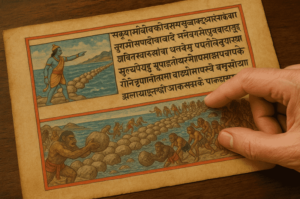
According to the Ramayana, Lord Rama, with the aid of his devoted Vanara (monkey or forest-dweller) army, embarked on the monumental task of constructing a bridge across the ocean. This extraordinary feat was led by the divine architects, Nala and Nila, who are described as the sons of Vishwakarma, the celestial architect. Their leadership transformed the seemingly impossible into a reality, with the Vanara army diligently casting mighty trees, logs, and giant boulders into the sea to form the causeway. This bridge is often referred to as Nala Setu, acknowledging Nala’s pivotal role in its construction.

A captivating element within this epic narrative is the legend of floating stones. It is said that Nala and Nila possessed a unique boon, allowing any stone they placed in water to float. Another popular version of the legend suggests that the Vanara army inscribed Lord Rama’s sacred name on the stones, rendering them unsinkable. This miraculous aspect adds a magical, almost divine, dimension to the bridge’s construction, defying natural laws and reinforcing the belief in divine intervention. The persistence of this legend, even with scientific explanations for floating stones, highlights a fundamental human desire for wonder and the sacred, transforming an “unsolved mystery” into a powerful draw for visitors.
The Ram Setu is not merely a tale confined to the Ramayana; its profound cultural significance is reinforced by its mention in numerous other ancient Hindu scriptures, including the Vishnu Purana, Brahmanda Purana, and Agni Purana. These texts solidify its deep historical and spiritual importance within Indian culture, establishing it as a sacred symbol for millions and a revered pilgrimage site. For many, the bridge’s identity is inextricably linked to these narratives, making it a living heritage rather than just a geological formation. Furthermore, Islamic legend also attributes the bridge’s use to Adam, who is said to have crossed it to reach Adam’s Peak in Sri Lanka, lending it the name “Adam’s Bridge”. This deep cultural anchoring means that any scientific explanation, while valuable, must contend with a deeply ingrained spiritual and historical belief, enriching the overall understanding of the site.
Scientific Perspective
From a scientific standpoint, the Ram Setu is predominantly characterized as a chain of natural limestone shoals, interspersed with sandbanks and coral formations. Its structure comprises parallel ledges of sandstone and conglomerates, which are hard at the surface but become coarser and softer as they descend into sandy banks. The surrounding waters are notably shallow, typically ranging from 1 to 3 meters (3 ft 3 in – 9 ft 10 in) in depth, though variations between 3 and 30 feet have been observed.
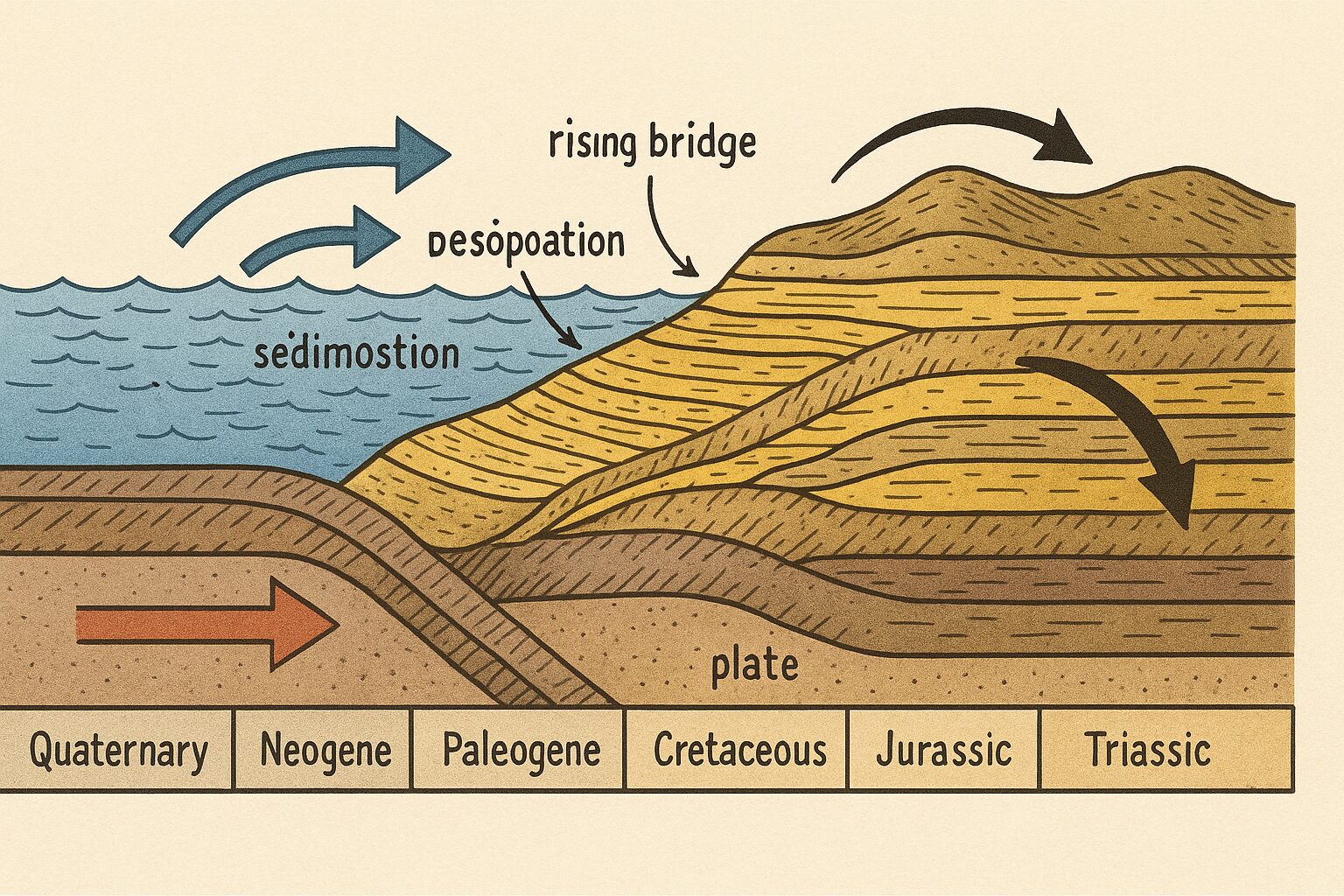
The prevailing scientific theories attribute the formation of Ram Setu to a complex interplay of geological forces. One significant theory points to tectonic movements, suggesting that the bridge is a natural structure resulting from such shifts. Geological evidence indicates that Sri Lanka was once part of the Indian landmass, eventually breaking away approximately 125,000 years ago, with the calcareous rectangular blocks found in the region serving as a testament to this ancient separation. Furthermore, the interaction of strong tidal currents and continuous sediment deposition over thousands of years is believed to have contributed to the buildup of these shoals. Patch reefs, common in the area, can significantly alter water circulation patterns, acting as natural barriers that redirect water flow and trap sediments, leading to the formation of sand aprons and other sedimentary features. This complex, dynamic interplay of long-term geological processes elevates the bridge from a mere “natural formation” to a unique geological wonder, showcasing Earth’s powerful and intricate processes.
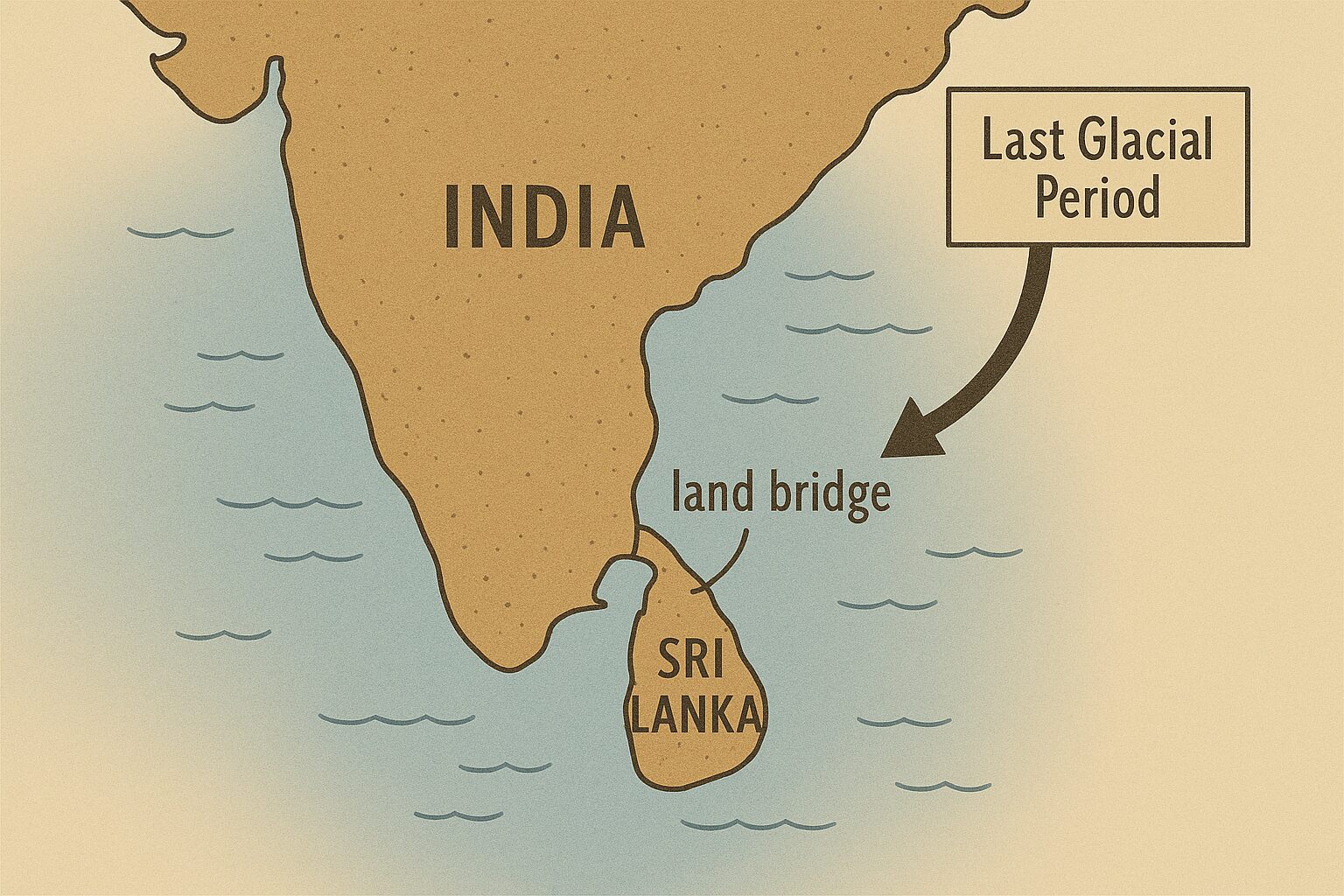
The role of ancient sea-level changes is also crucial to understanding the bridge’s natural history. During the Last Glacial Period, which spanned from approximately 115,000 to 11,700 years Before Present, global sea levels were significantly lower, reaching a maximum of 120 meters (390 ft) below present values. This dramatic drop in sea levels exposed the entirety of the relatively shallow Palk Strait (which reaches a maximum depth of only 35 meters or 115 ft) as dry land, effectively connecting India and Sri Lanka. Following the rise to present sea levels during the Holocene epoch, by around 7,000 years ago, the strait, including the region of Adam’s Bridge, became submerged. The fact that it was reportedly passable on foot until the 15th century, and then submerged by a cyclone, further emphasizes its dynamic interaction with natural forces, reinforcing its evolving, natural character.
Adding to the intrigue are the 2002 NASA satellite images that vividly revealed the strikingly linear pattern of the shoals. While NASA itself clarified that these were natural formations resulting from sedimentation and coral growth, and that such photographs cannot definitively determine the age, substratum, geological structure, or anthropological status of the ocean bed, the linear pattern itself has led some researchers and the public to speculate about human intervention. This highlights how visual data, even with scientific caveats, can be interpreted differently based on pre-existing cultural narratives and beliefs. This dual interpretation creates a persistent feedback loop that fuels the debate rather than resolving it, making the “mystery” of its origin more profound and captivating for a broad audience.
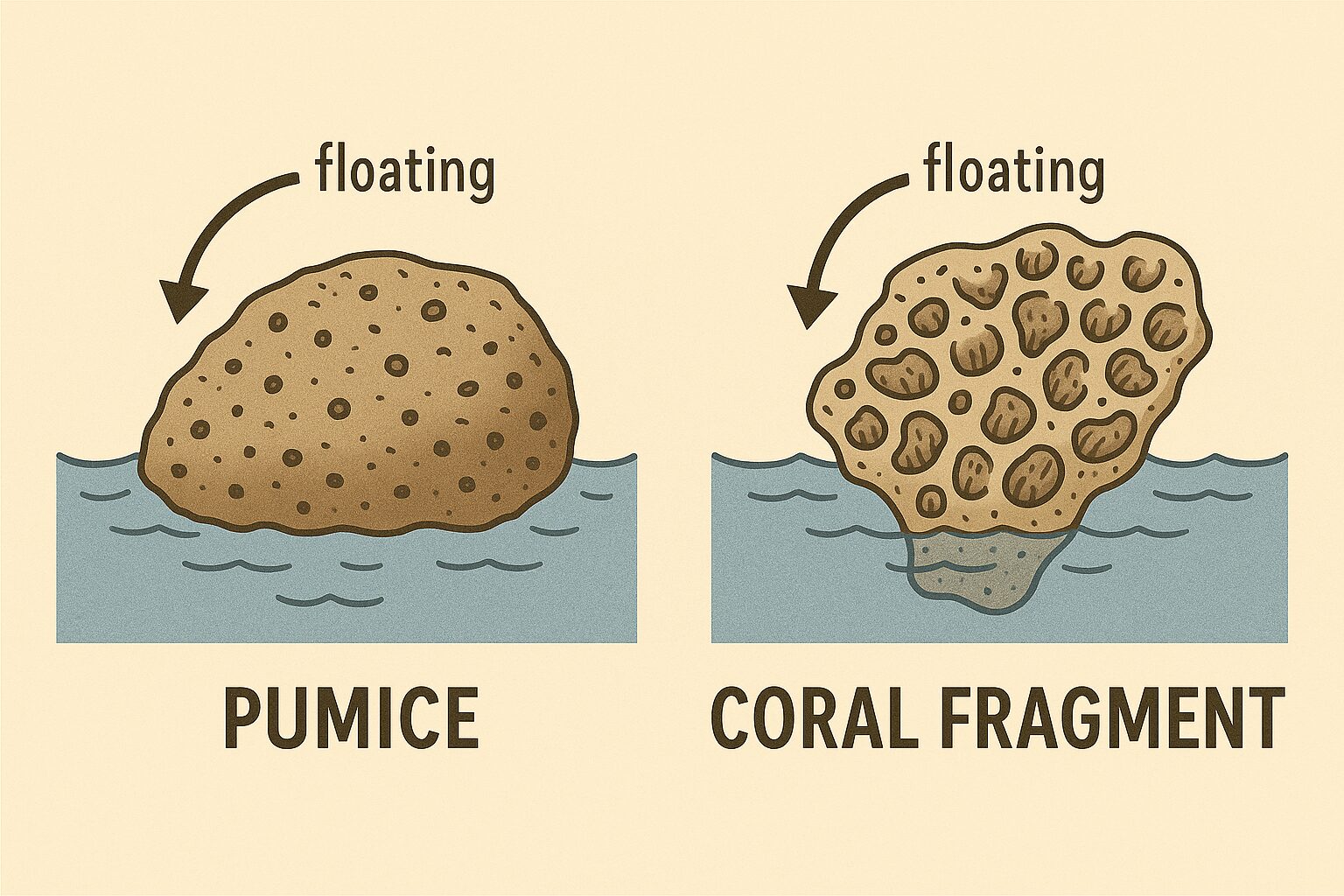
The phenomenon of “floating stones,” often associated with the bridge in legend, also finds scientific explanations. Actual findings near Rameshwaram include stones that exhibit buoyancy. Science offers two primary explanations: pumice and porous coral. Pumice is a volcanic rock formed when lava cools rapidly, trapping gas bubbles, which makes it significantly less dense than water (typically 0.25 g/cm³ compared to water’s 1 g/cm³). Additionally, porous pipe corals, abundant in the Gulf of Mannar, a known biodiversity hotspot, are lightweight and buoyant due to trapped air, offering another plausible natural reason for some floating stones. However, the existence of denser, inexplicably floating black stones at temples like Rajakaliamman adds to the enduring puzzle, challenging standard geological explanations and keeping the mystery alive.
Man-Made Debate
Despite compelling scientific explanations for its natural formation, a significant body of belief and some scientific interpretations argue for human, or divine, intervention in the construction of Ram Setu. These arguments often draw on observations that, while acknowledged by science, are interpreted through a different lens. The striking linear alignment of the bridge, for instance, is a key point of contention. While NASA attributes this linearity to natural processes, proponents of the man-made theory argue that such a consistent, straight pattern over 48 kilometers is highly unusual for a purely natural formation, suggesting intelligent design or ancient human engineering. The Ramayana itself describes the bridge as having a precise 10:1 length-to-width ratio, a proportion that some proponents claim matches the current structure, further fuelling the argument for deliberate construction.
Further support for human intervention comes from studies on the bridge’s distinct structural layers. Core sampling studies, notably by former Geological Survey of India (GSI) Director S. Badrinarayanan, suggested that while the underlying base is much older, the upper layer, composed of coral and boulders, appears to have been “artificially placed”. Geological and geophysical studies have also revealed “loose marine sand below the coral layer, clearly indicating that the coral layer in the form of boulders are not natural and formed there on their own, but have been transported by somebody and dumped there”. This layering is a critical piece of evidence for human involvement, suggesting that ancient builders may have constructed upon a pre-existing natural foundation. Some interpretations even suggest that the construction methods described in the Ramayana, such as piling trees and then stones, align with ancient civil engineering principles, including an understanding of “pore pressure” to stabilize structures in shallow waters. This implies a sophisticated ancient knowledge that could have been applied to such a monumental task. The “man-made” argument, therefore, is not solely based on faith but strategically incorporates scientific observations, re-interpreting them to support a cultural narrative.
The age of the Ram Setu also presents intriguing coincidences that fuel the man-made argument. Radiocarbon dating of sand and coral samples from the area suggests that the formation could be between 7,000 and 10,000 years old. This timeline intriguingly aligns with the Treta Yuga, the epoch associated with the Ramayana, creating a compelling link between scientific dating and mythological chronology. While some studies on corals grown directly on the bridge itself suggest a younger age of 3,500 years, this could point to periods of more recent coral growth on the foundation, or even human activity within that timeframe. The varying age estimates are not necessarily contradictions but represent different layers of the bridge’s history, allowing for multiple, co-existing interpretations. This concept of “epistemic plurality” is crucial, as it allows the mystery to persist and invites personal contemplation, enhancing the captivating nature of the site.
Further historical accounts lend weight to the man-made argument. Rameshwaram temple records and other historical narratives suggest that the bridge was reportedly passable on foot up to the 15th century. It was only after a severe cyclone in 1480 AD that parts of it were destroyed, and the channel deepened, making navigation difficult. This implies a more substantial, perhaps enhanced, structure existed relatively recently, supporting the idea of human enhancement of a natural base. The ongoing research and evolving official stances continue to keep the debate alive. The Council for Scientific and Industrial Research (CSIR) and National Institute of Oceanography (NIO), Goa, are currently undertaking an underwater exploration project, deploying research vessels like Sindhu Sadhana to collect sediment samples from 35-40 meters below the water level. This signifies a continued, serious scientific inquiry into its origins, including the search for submerged habitations. The Archaeological Survey of India (ASI) has also seen an evolving stance; after an initial affidavit in 2007 that rejected mythological claims, it was later withdrawn, and officials suspended. More recent reports, including remarks from a former GSI director in 2008, suggest the structure shows evidence of “significant construction by humans”. The ASI has since approved further underwater research, indicating a shift towards deeper investigation rather than outright dismissal.
For immersive culture walks in India, visit 5 Senses Walks.
Scientific vs. Mythological Perspectives
| Feature/Aspect | Scientific Perspective | Mythological/Man-Made Perspective |
| Origin Story | Natural formation due to tectonic movements, sediment deposition, coral growth | Built by Lord Rama and his Vanara Sena (monkey army) led by divine architects Nala and Nila |
| Composition | Chain of natural limestone shoals, sandbanks, coral formations; parallel ledges of sandstone and conglomerates | Constructed using trees, logs, and large boulders , with distinct layers of “placed” boulders on older sand |
| Length | Approximately 48 km (30 miles) | Described as 100 Yojana (approx. 35 km) in length with a 10:1 length-to-width ratio |
| Depth | Typically 1-3 m (3 ft 3 in – 9 ft 10 in) deep, varying between 3 and 30 feet | Built across a shallow sea (1-10m deep) |
| Age Estimates | Geological base: 125,000 years ago ; Upper layers/Corals: 7,000-10,000 years old , some corals 3,500 years | Coincides with Treta Yuga (Ramayana timeline), estimated 7,000-10,000 years ago |
| Key Supporting Points (Scientific) | NASA satellite imagery shows linear pattern ; Formed due to tectonic movements and sand trapped in corals ; Sea-level changes exposed it as dry land during Last Glacial Period ; Pumice and porous corals explain floating stones | |
| Key Supporting Points (Mythological/Historical) | Strikingly symmetrical/linear formation ; Underlying base older than top layer, suggesting external placement ; Reportedly walkable until 15th century ; Floating stones found today | |
| Walkability | Submerged by around 7,000 years ago | Reportedly passable on foot until 15th century, destroyed by 1480 cyclone |
Modern Conundrum
The Ram Setu’s enigmatic nature extends into modern times, particularly through the ambitious Sethusamudram Shipping Canal Project. First proposed in colonial India in the 1860s, this multi-million dollar project was finalized by the Indian government in 2005. Its primary economic rationale was to create a navigable channel across the shallow Palk Strait, thereby allowing ships bound for India’s eastern coast to bypass the need to circle the entire island of Sri Lanka. This was projected to save significant travel time, estimated at 350 nautical miles or 10 to 30 hours of sailing, and was intended to boost industrial, economic, and tourism activities in the region.
However, the Sethusamudram project quickly became embroiled in intense controversies, highlighting a fundamental clash between economic development and the preservation of a revered heritage site. For millions of Hindus, the Ram Setu is far more than a geographical feature; it is a sacred symbol, believed to have been built by Lord Rama himself, and any tampering with it is considered sacrilegious. This deep religious sentiment led to widespread protests and numerous legal battles, including Public Interest Litigations (PILs) filed in the Supreme Court. The inability to easily proceed with the project underscores the immense societal weight given to the bridge’s cultural and religious significance, even against perceived economic benefits. This makes it a powerful symbol of India’s complex identity, where ancient beliefs profoundly influence modern policy.
Beyond religious concerns, environmentalists raised serious alarms about the project’s potential ecological consequences. They warned of severe disruption to marine life, particularly the rich biodiversity of the Gulf of Mannar, which is home to coral reefs, fish, lobsters, shrimps, and crabs. Concerns were also voiced about the increased vulnerability of India’s coastline to tsunamis, a fear amplified by the 2004 tsunami experience, where the Ram Setu reportedly mitigated the impact on coastal areas. The prospect of finding safe places for dumping dredged material and the potential for pollution from increased ship traffic further compounded these environmental worries. Apprehensions also existed regarding the project’s true economic viability, with questions about the canal’s capacity for larger ships (only up to 30,000 tonnes) and the overall cost-benefit analysis. Colonial surveyors had previously disapproved of dredging Adam’s Bridge due to its extraordinary sand shifts and reef formations, raising doubts about its suitability.
The project was ultimately halted by a Supreme Court judgment in 2013, largely due to the religious sensitivity surrounding the site. While the Centre later informed the Supreme Court in 2018 that the Ram Setu would not be affected in the execution of the Sethusamudram Shipping Canal project, the debate continues to this day. There are ongoing calls for Ram Setu to be declared a national heritage monument, underscoring its enduring significance beyond mere geology. The very ambiguity and “mystery” surrounding Ram Setu’s origin (natural vs. man-made) has served as a powerful argument against its destruction for the canal project. If it is potentially man-made or divinely built, it is sacred and inviolable; if it is a unique natural formation, it holds significant geoheritage value. This dual appeal has effectively mobilized diverse groups—religious, environmental, and cultural—to protect it, illustrating how the unresolved nature of its origin paradoxically contributes to its preservation. The mystery itself has, in essence, become a shield.
For a guided tour of Rameshwaram, please check Immersive experience at Rameshwaram.
Where Myth Meets Pilgrimage
Rameshwaram is more than just a gateway to the enigmatic Ram Setu; it is a captivating tourist destination renowned for its profound spiritual significance and breathtaking natural beauty. For travelers, it offers a unique opportunity to experience the deep cultural resonance of the Ram Setu narrative, making it a must-visit for those seeking a blend of history, culture, and natural splendor. The entire spiritual and cultural landscape of Rameshwaram is deeply intertwined with the Ramayana narrative and the bridge, creating an immersive, holistic experience for tourists. 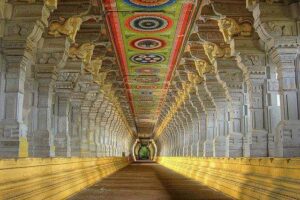
At the heart of Rameshwaram lies the majestic Ramanathaswamy Temple, a revered Hindu pilgrimage site and one of the 12 Jyotirlinga shrines dedicated to Lord Shiva. This temple holds deep connections to Lord Rama, who is believed to have worshipped Shiva here to atone for killing Ravana (a Brahmin) and to seek blessings before embarking on the bridge’s construction. The temple itself is an architectural marvel, boasting stunning Dravidian architecture and featuring the longest pillared corridor among all Hindu temples in India. Walking through its intricate corridors offers a profound sense of spiritual connection and historical grandeur.
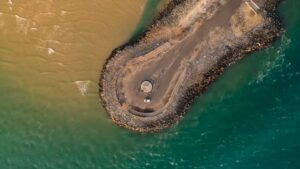
Rameshwaram is dotted with other sacred sites that deepen the Ram Setu experience and allow visitors to connect directly with the ancient legends. Dhanushkodi, the southernmost tip of Pamban Island, offers a clear and mesmerizing view of the starting point of the Ram Setu. This “ghost town,” tragically destroyed in a 1964 cyclone, also marks the historical site where Vibhishana, Ravana’s brother, surrendered to Lord Rama. Its desolate beauty adds a poignant historical layer to the visit. Nearby, Agni Theertham is a sacred beach where devotees perform ritualistic dips in the ocean waters, believed to be the spot where Lord Rama prayed for atonement. The Panchmukhi Hanuman Temple, known for its majestic idol of Lord Hanuman, a pivotal figure in the Ramayana’s bridge construction, preserves some of the mysterious floating stones, offering a tangible link to the legend. Finally, Gandamadana Parvatham, the highest point on the island, is believed to be where Lord Rama stood searching for Sita, leaving his divine footprints behind. From this hillock, visitors can enjoy panoramic views of the island and the distant outline of the Ram Setu, truly connecting with the epic scale of the narrative.
Key Attractions & Ram-Setu Connection
| Site | Connection to Ram Setu | What to Expect |
| Ramanathaswamy Temple | Lord Rama worshipped Shiva here before building the bridge to seek blessings and atone for killing Ravana. | One of the 12 Jyotirlinga shrines; stunning Dravidian architecture, longest corridor among Hindu temples; profound spiritual significance. |
| Dhanushkodi | The southernmost tip of Pamban Island, offering a clear view of the starting point of Ram Setu. Site where Vibhishana surrendered to Rama. | “Ghost town” with haunting desolate beauty; unique land’s end experience; direct view of the bridge’s beginning. |
| Agni Theertham | Sacred beach where devotees take a purifying dip; believed to be where Lord Rama prayed for atonement. | Serene beach atmosphere; important ritualistic site for pilgrims; offers a sense of spiritual purification. |
| Panchmukhi Hanuman Temple | Houses a majestic idol of Lord Hanuman, a key figure in the Ramayana’s bridge construction. Some floating stones associated with the bridge are preserved here. | Unique five-faced Hanuman idol; a tangible link to the floating stone mystery; blends modern and traditional architecture. |
| Gandamadana Parvatham | A hillock where Lord Rama stood searching for Sita, leaving his footprints. Offers panoramic views of the island and the distant Ram Setu. | Highest point on the island; breathtaking panoramic views; sacred site with Rama’s footprints. |
| Pamban Bridge | The 2 km long bridge connects Pamban Island (Rameshwaram) to the Indian mainland, serving as the gateway to the island and thus to Ram Setu. | An architectural marvel and engineering feat; offers scenic views during the train or road journey to Rameshwaram. |
To truly experience the wonder of Ram Setu, visitors are encouraged to witness the bridge firsthand. The bridge is visible from various points along the Rameshwaram coast. For a closer look, boat rides are available, offering a serene journey through pristine waters, ideal for photography and quiet contemplation. While walking on the submerged parts of the bridge is not possible, these tours take visitors close to the visible shoals, allowing for an intimate encounter with the mystery. The ideal time to visit Rameshwaram and the Ram Setu is between October and March, when the weather is most pleasant for sightseeing and boat excursions. The fact that Ram Setu remains an “unsolved mystery” is its greatest asset for attracting visitors. It is not a definitive answer that draws people, but the lack of one, coupled with compelling, albeit conflicting, evidence from both scientific and mythological realms. This inherent ambiguity invites personal interpretation, reflection, and exploration, transforming a simple sightseeing trip into a more engaging and thought-provoking experience.
While visitng Rameshwaram, the entry point is usually Madurai. A city tour of Madurai would be an enriching experience. Visit Madurai Experience, for more details.
Conclusion: The Enduring Allure of Ram Setu
The Ram Setu stands as a captivating testament to India’s rich tapestry of belief and natural wonder, a place where the grandeur of ancient Hindu epics intertwines seamlessly with the profound forces of geological science. Whether one views it as a divine construction, a monumental feat of ancient engineering, or a unique geological marvel shaped by millennia of natural processes, its very existence continues to challenge our understanding and ignite our imagination, making it one of India’s most compelling mysteries.
This remarkable structure holds a unique status as a geo-cultural heritage site, embodying both Earth’s dynamic history and humanity’s enduring spiritual narratives. It is a place that invites not just observation, but deep contemplation, personal connection, and a profound appreciation for the intricate relationship between nature, history, and faith. The ongoing debates surrounding its origin, far from diminishing its appeal, only serve to deepen its allure, transforming it into a symbol of the complex dialogue between tradition and modernity.

For those seeking an unforgettable travel experience, a journey to Rameshwaram is an essential pilgrimage. Standing at the edge of the Palk Strait, gazing upon the enigmatic Ram Setu, offers a rare opportunity to connect with India’s ancient soul, to ponder the mysteries of time, faith, and nature. It is an experience that promises to leave visitors with a sense of awe and wonder that only this extraordinary site can inspire.
Leave a Reply