
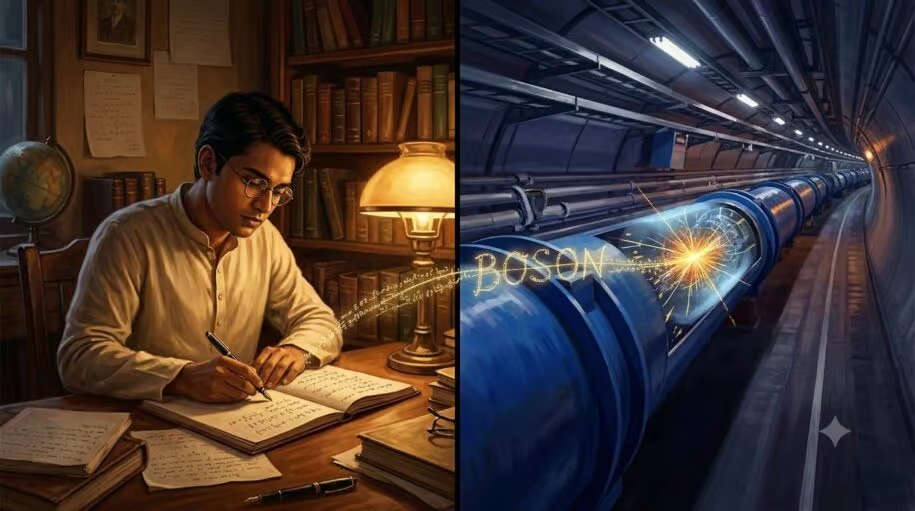
On the morning of July 4 2012, scientists at CERN in Geneva announced one of the most significant discoveries in the history of physics.
After a quest spanning nearly half a century, physicists had found a new subatomic particle consistent with the Higgs boson, believed to be a crucial building block that led to the formation of the universe. Rousing cheers and a standing ovation broke out at CERN as scientists presented their data. CERN Director General Rolf Heuer said they had reached a milestone in their understanding of nature.
The world’s newspapers called it the God Particle. The name had been coined in 1993 by physicist Leon Lederman in a book title. Peter Higgs, the British physicist who had theorised the particle’s existence in 1964, expressed joy at the discovery and said he never expected it to happen in his lifetime.
But there is an intrinsic Indian connection to what happened at CERN that day. It is Bose after whom the sub-atomic particle boson is named.
The Higgs boson. The name contains two names. Peter Higgs, who theorised the specific particle discovered at CERN. And Bose, a young Indian physicist named Satyendra Nath Bose who, in 1924, sent a paper and a letter to Albert Einstein that would shape the nascent field of quantum mechanics and secure Bose a place in the annals of scientific history.
There is no other scientist whose name is linked with Einstein as Bose’s name is in all the textbooks of physics.
And almost nobody outside India knows his name at all.
This is the complete story of Satyendra Nath Bose, the God Particle, and why the most important physics discovery of the 21st century carries the name of a professor from Kolkata who sent a rejected paper to Einstein and made the most consequential cold call in the history of science.
God Particle India: Who Was Satyendra Nath Bose and What Did He Actually Do
The Man Behind the God Particle India Carries in Its Scientific Legacy
Satyendra Nath Bose was born January 1st 1894, in Kolkata, India. Satyendranath began his education at an elementary school in Calcutta before entering the Hindu School in 1907. Later he attended Presidency College, where another noted scientist Meghnad Saha was his fellow student. Bose came in contact with teachers like Jagdish Chandra Bose and Prafulla Chandra Ray, who inspired him to aim high in life.
The intellectual environment that produced Satyendra Nath Bose was extraordinary. Presidency College on College Street in Kolkata was, in the early 20th century, one of the most intellectually charged educational institutions in Asia. Jagadish Chandra Bose, who had transmitted the world’s first wireless signal a year before Marconi, was teaching there. Prafulla Chandra Ray, who founded India’s pharmaceutical industry and mentored an entire generation of scientists, was teaching there. Meghnad Saha, who would develop the ionization equation that transformed astrophysics, was Bose’s classmate. The Bengali Renaissance that had made Kolkata the intellectual capital of the subcontinent was at its peak.
Bose received a lecturer post at the University of Calcutta from 1916 to 1921, when he moved into a professorship position at the new University of Dhaka. It was from Dhaka that he would write the paper that changed physics.
The Paper That Was Rejected Before India’s God Particle Connection Was Born

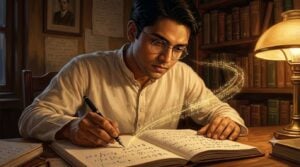
One day, as he was preparing a class lecture on the derivation of Planck’s law, he became dissatisfied with the usual approach. Max Planck’s law described how objects radiate heat as electromagnetic radiation, one of the foundational results of early quantum physics. Every existing derivation of Planck’s law used a method that smuggled in classical physics assumptions to get the right answer. Bose wanted to derive it purely from quantum principles, from first principles alone, without any classical scaffolding.
What he realised was extraordinary. Bose devised a new way to count and describe the behaviour of identical quantum particles. Unlike marbles or other distinguishable objects, these particles don’t insist on personal space: they can crowd into the same state rather than each occupying a unique state. Bose showed that treating particles as indistinguishable leads to a new statistical law that correctly produces Planck’s formula without taking recourse to classical physics.
This sounds technical. But the core insight is almost philosophical in its depth. In everyday life every object is distinguishable from every other object. This coin is not that coin. This electron is this electron. Our entire intuition about counting assumes we can tell things apart.
Bose proposed that photons, particles of light, are genuinely and fundamentally indistinguishable from each other. Not just similar. Identical in a deeper sense than any two everyday objects can be identical. And this fundamental indistinguishability changes the mathematics of how you count them, which changes the statistical law that describes how they behave, which produces Planck’s formula exactly right without any classical assumptions whatsoever.
Bose submitted his paper to the Philosophical Magazine in late 1923. Six months later he was informed that the paper had received a negative referee report and had consequently been rejected.
But he was convinced that he had attained something significant. So he did something that required either extraordinary self-confidence or extraordinary desperation, or both.
The Most Consequential Cold Call in the History of Science
On June 4th 1924, Satyendra Nath Bose, a 30-year-old reader at the University of Dacca, sent Einstein a manuscript in English with a covering letter full of praise, asking him, in no uncertain terms, to translate it into German and submit it for publication to the Zeitschrift für Physik.
The letter began: Respected Sir: I have ventured to send you the accompanying article for your perusal and opinion. I am anxious to know what you think of it.
Consider the audacity of this moment. A thirty-year-old professor at a university in colonial India, teaching in a city that the centres of European physics had almost certainly never heard of, writing to the most famous scientist alive and asking him, essentially, to read my work, translate it yourself, and get it published in the best journal in the field.
Einstein didn’t just remember; he was so impressed by the elegant derivation of Planck’s Law that he translated the paper into German himself and got it published.
Einstein’s reply came in a postcard dated 2 July 1924 on which he wrote: I have translated your paper and given it to Zeitschrift für Physik for publication. It signifies an important step forward and pleases me very much.
A paper that had been rejected by the British Philosophical Magazine was translated personally by Albert Einstein and published in the leading physics journal in the world within a month of being sent.
Einstein was so impressed with this idea that he applied it to atoms, predicting a strange new state of matter, what we now call a Bose-Einstein condensate, where particles clump into the same state at low temperatures.
Thus was born Bose-Einstein statistics, one of the two fundamental statistical frameworks of all quantum physics. All integral spin particles in nature have been found to obey this statistics and are called bosons.
From Bosons to the God Particle: How India’s Connection to the Higgs Boson Was Made
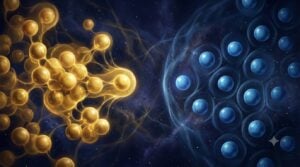
What a Boson Is and Why the God Particle Carries India’s Name
To understand why the God Particle carries the name of a Kolkata physicist, you need to understand what a boson actually is and why the distinction matters.
All integral spin particles in nature have been found to obey Bose-Einstein statistics and are called bosons. All half-odd integral spin particles obey Fermi-Dirac statistics, which was given later in 1926 and are called fermions.
This is the fundamental division of all particles in the universe. Everything in the cosmos is either a boson or a fermion. There is no third category. Electrons are fermions. Protons are made of quarks, which are fermions. The Pauli exclusion principle, which prevents two fermions from occupying the same quantum state and is the reason atoms have structure and matter has form, applies exclusively to fermions.
Bosons are different. A boson in physics is a component of subatomic particles such as protons and photons, which exist in every atom of matter. The photon, the particle of light, is a boson. The gluon, which carries the strong nuclear force that holds the nucleus together, is a boson. The W and Z bosons carry the weak nuclear force responsible for radioactive decay. And the Higgs boson, the God Particle discovered at CERN in 2012, is a boson.
The existence of a then-theoretical Higgs boson resolved a puzzle in the Standard Model of physics. The thinking in the Standard Model was that particles such as photons have no mass. The mathematics of the Standard Model explained successfully the existence of particles, but not mass or matter.
The Higgs boson is the particle associated with the Higgs field, a field that permeates all of space and through which particles acquire their mass. Without the Higgs field there would be no mass. Without mass there would be no atoms, no chemistry, no stars, no planets and no people. The God Particle is not named for drama or religion. It is named because without it, nothing would exist in the form that anything exists in.
And every particle of the class that the God Particle belongs to is named after Satyendra Nath Bose of Kolkata.
What Bose-Einstein Statistics Actually Changed and Why It Was So Revolutionary
What made Bose-Einstein statistics so significant? In plain terms, Bose devised a new way to count and describe the behaviour of identical quantum particles. Unlike marbles or other distinguishable objects, these particles don’t insist on personal space: they can crowd into the same state rather than each occupying a unique state.
This crowding behaviour of bosons is the essential difference between bosons and fermions, and it has consequences that extend far beyond the abstract mathematics of quantum statistics.
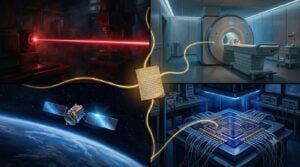
Lasers exist because of Bose-Einstein statistics. The coherent light of a laser is produced by photons, which are bosons, all crowding into exactly the same quantum state and behaving as one. If photons were fermions and could not occupy the same state, lasers would be impossible.
Superconductivity, the phenomenon in which certain materials at low temperatures conduct electricity with zero resistance, is a consequence of electron pairs forming bosons and Bose-condensing into a single quantum state. The MRI machines in hospitals depend on superconducting magnets that work because of Bose-Einstein statistics.
Bose-Einstein condensates, a new state of matter in which thousands of atoms condense into a single giant atom that behaves like a wave, enable direct study of the quantum world. The atomic clocks in GPS satellites depend on quantum behaviour that traces directly to the statistical framework Bose developed in Dhaka in 1924.
The paper that the Philosophical Magazine rejected without much thought in 1923, and that Albert Einstein read with a postcard of admiration in 1924, is embedded in technologies that touch every person on earth every single day.
Why Bose Never Won the Nobel Prize Despite India’s God Particle Legacy
Many in India were smarting over what they saw as a slight against one of their greatest scientists. Media covering the Higgs boson discovery gave lots of credit to British physicist Peter Higgs for theorising the elusive subatomic God particle, but little was said about Satyendranath Bose, the Indian after whom the boson is named.
The question of why Bose was never awarded the Nobel Prize is one of the most discussed grievances in the history of Indian science. The Indian government lamented that Bose was a forgotten hero, noting that at least 10 scientists have been awarded the Nobel in the same field in which Bose made his foundational contribution.
The honest answer is that the Nobel Prize in Physics was not awarded for Bose-Einstein statistics as a specific achievement in the way it was for other quantum discoveries of the same era. Einstein himself was never awarded the Nobel for general relativity, the greatest scientific achievement of the 20th century, receiving it instead for the photoelectric effect. The Nobel selection process has always been imperfect and has always reflected the institutional politics of European physics as much as the actual significance of contributions.
What is beyond dispute is that the word boson, embedded permanently in the name of the most significant particle discovery of the 21st century, carries the name of Satyendra Nath Bose of Kolkata. He is called the Father of the God Particle. And the building where he studied, Presidency College on College Street in Kolkata, also produced Jagadish Chandra Bose, Prafulla Chandra Ray, Meghnad Saha, CV Raman and Amartya Sen.
The Bose-Einstein Legacy: From Kolkata to CERN and the God Particle India Gave the World

How CERN Acknowledges India’s Contribution to the God Particle
At the core of CERN, spread over two countries near the Swiss-Franco border, is the 27-kilometre-long tunnel over 70 metres beneath the ground where the Large Hadron Collider is located. The experiment aimed to recreate the conditions of the Big Bang, when the universe is thought to have exploded into existence about 14 billion years ago. Over 100 Indian scientists are working round the clock at CERN.
Paolo Giubellino, CERN spokesperson, said India is like a historic father of the project.
India’s connection to the God Particle discovery is not only historical and nominative. It is active, ongoing and substantial. The Department of Atomic Energy and the Department of Science and Technology of India are both official member states of CERN. Indian engineers contributed to the construction of the Large Hadron Collider’s magnets. Indian physicists are part of the ATLAS and CMS experiment collaborations that actually detected the Higgs boson in 2012. The contribution that began with a rejected paper sent to Einstein from Dhaka in 1924 has continued as a living, active partnership with the most ambitious physics experiment in human history.
The Bose-Einstein Condensate: The New State of Matter Nobody Talks About
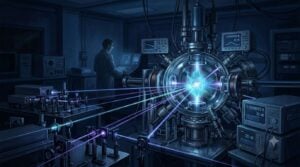
Einstein applied Bose’s method to atoms, predicting a strange new state of matter, what we now call a Bose-Einstein condensate, where particles clump into the same state at low temperatures.
A Bose-Einstein condensate is a fifth state of matter. The four states most people learn in school are solid, liquid, gas and plasma. A Bose-Einstein condensate is what happens when you cool a group of bosonic atoms to temperatures approaching absolute zero, so cold that the individual particles lose their individual quantum identities and merge into a single collective quantum state, behaving as one giant atom rather than a collection of separate particles.
The first Bose-Einstein condensate was produced in a laboratory in 1995, seventy-one years after Bose and Einstein predicted it. The scientists who produced it, Eric Cornell, Wolfgang Ketterle and Carl Wieman, were awarded the Nobel Prize in Physics in 2001.
Bose-Einstein condensates are not simply laboratory curiosities. They are the most precisely controlled quantum systems ever created and are central to the development of quantum computers, quantum sensors and the quantum clocks that will form the backbone of the next generation of GPS and navigation systems.
Every time a physicist works with a Bose-Einstein condensate, every time a quantum computer uses bosonic modes for error correction, every time a precision measurement is made with atom interferometry, they are working with the direct consequence of an insight a thirty-year-old professor in colonial India had while dissatisfied with the standard derivation of Planck’s law in 1924.
Experience the God Particle India Heritage With 5 Senses Tours
Visit the Building Where the Father of the God Particle India Produced Studied
The building where Satyendra Nath Bose studied and where Meghnad Saha was his classmate is still standing on College Street in Kolkata. Presidency College, built in 1875, is the single most intellectually productive building in the history of South Asian science. Walking through its corridors with an expert guide who can bring the complete story of Bose, Saha, Jagadish Chandra Bose, Prafulla Chandra Ray, CV Raman and Amartya Sen to life is one of the most genuinely extraordinary intellectual heritage experiences available anywhere in India.
Our Kolkata tours cover the complete Bengali scientists heritage trail including Presidency College, the Bose Institute founded by Jagadish Chandra Bose in 1917 as the first multidisciplinary research institute in India, the Indian Museum and the complete intellectual landscape of the city that produced the Father of the God Particle alongside five other scientists who changed the world.
Our Kolkata city tour is the most complete single-day private guided experience of Kolkata’s extraordinary heritage, connecting the scientific tradition of Presidency College to the literary legacy of Rabindranath Tagore, the colonial grandeur of the Victoria Memorial and the living culture of the world’s most intellectually intense neighbourhood, College Street.
The Complete Ancient Indian Science Heritage Journey

The God Particle carries the name of a Kolkata physicist. The boson class of particles that includes the Higgs boson is named after a man who studied at Presidency College alongside Meghnad Saha, whose ionization equation transformed astrophysics, who was taught by Jagadish Chandra Bose, who proved wireless transmission before Marconi, and Prafulla Chandra Ray, who founded India’s pharmaceutical industry.
This extraordinary concentration of scientific achievement in one building in one city is part of a story that stretches across the entire subcontinent. Kanada proposed atomic theory near Dwaraka in Gujarat 2600 years before Dalton, and our Ahmedabad tours connect travellers to the Indus Valley sites and Gujarat heritage where this story begins. Madhava of Sangamagrama invented calculus in Kerala two centuries before Newton, and our Kochi tours cover the complete Kerala heritage where his extraordinary mathematics was developed. Panini built the world’s first formal grammar in ancient India, a structure computer scientists now call the Panini-Backus Form.
For travellers who want the complete arc of India’s scientific heritage in a single private guided journey, 5 Senses Tours can design an extraordinary circuit from Gujarat to Kerala to Kolkata that traces two and a half thousand years of the most consistently brilliant scientific tradition that any civilisation has produced.
5 Senses Tours is recognised by India’s Ministry of Tourism, winner of the Tripadvisor Travellers Choice Award and the Outlook Responsible Tourism Award. Every tour is private, expert-guided and completely customised for your group.
The Complete Ancient Indian Science Blog Series
The story of Satyendra Nath Bose and the God Particle is one chapter in an extraordinary series of discoveries that 5 Senses Tours has been documenting across the complete arc of India’s scientific heritage. Each blog in this series tells a story that most international travellers have never encountered and that connects directly to a physical heritage destination you can visit.
The building where Bose studied is the same building our Bengali scientists blog covers in full, a single address on College Street in Kolkata that also produced Jagadish Chandra Bose, Prafulla Chandra Ray, Meghnad Saha, CV Raman and Amartya Sen across seventy extraordinary years.
The boson class of particles that includes the Higgs boson carries the name of a man who was taught at Presidency College by Jagadish Chandra Bose, who had already beaten Marconi to wireless transmission in 1895, and that story is told in full in the same Bengali scientists blog.
Meghnad Saha, Bose’s classmate at Presidency College and the physicist whose ionization equation transformed astrophysics, is also covered in that same blog, making it the single most complete account of the intellectual world that shaped the Father of the God Particle.
The tradition of ancient Indian science that produced Bose did not begin in Kolkata. Kanada proposed atomic theory 2600 years before Dalton in Gujarat, a story told in our Kanada atomic theory blog. Madhava of Sangamagrama invented calculus two centuries before Newton in Kerala, covered in our Madhava Kerala mathematician blog. Panini built the world’s first formal grammar in ancient India, a structure computer scientists now recognise as equivalent to Backus Naur Form, documented in our Panini world’s first programmer blog. And Chanakya catalogued forty ways to commit government fraud and built the world’s first audit system to catch them, in a lost manuscript rediscovered by a librarian in Mysore in 1905, told in our Chanakya Arthashastra blog.
The 2022 Nobel Prize in Physics proved that the universe violates local realism at the quantum level, a finding that resonates with Advaita Vedanta’s two-thousand-year-old claim that separation is not the ultimate nature of reality, an honest and careful comparison made in our ancient Indian philosophy and quantum physics blog.
And the Indus Valley script, the writing system of the civilisation that preceded all of these figures by two thousand years, remains the most important undeciphered writing system in the world, with a one million dollar prize now offered for its decipherment, documented in our Indus Valley script blog.
Every one of these stories connects to a physical place in India you can visit with 5 Senses Tours.
Contact 5 Senses Tours to begin planning your Indian science heritage journey today