

In 1959 a computer scientist named John Backus invented a notation for describing the grammar of programming languages. It is called Backus Naur Form, and it is one of the foundational tools of modern computer science. Every programming language you have ever used, Python, JavaScript, the language that runs your phone, was at some point defined using a descendant of this notation.
In 1967 a researcher reading an old Sanskrit grammar noticed something extraordinary and wrote a letter to the Communications of the ACM, the most respected computer science journal in the world, to point it out.
Someone had already invented Backus Naur Form. Twenty five hundred years earlier. In Sanskrit.
Knuth (1964), in a Letter to the Editor of CACM, makes the point that the metasyntactic notation used in the ALGOL 60 report should be renamed, since Backus was not the first to use the form with which his name has become associated, although he did discover it independently. Panini was a scholar who flourished between 400 BC and 200 BC, and in order to describe the rules of Sanskrit grammar he invented a notation equivalent in its power to that of Backus.
The researchers proposed a new name for the notation computer scientists had been using for nine years.
The Panini Backus Form.
This is the story of Panini, the Sanskrit grammarian born near the Indus river in what is now Pakistan sometime around the 5th century BCE, who wrote a grammar so rigorous, so mechanical and so completely rule-based that twenty five centuries later, computer scientists building the first programming languages discovered he had already solved their problem.
If Backus and Naur are the parents of modern programming syntax, Panini is the grandfather nobody knew about until a researcher accidentally found him in a Sanskrit manuscript.
Panini World’s First Programmer: Who Was He and What Did He Actually Build

Who Was Panini and Why Computer Scientists Call Him a Programmer
Panini was a Sanskrit grammarian who flourished between 400 BC and 200 BC. Panini was born in Shalatula, a town near Attock on the Indus river in present day Pakistan. He wrote the Ashtadhyayi, an eight chapter grammar of Sanskrit so completely rule based that modern linguists and computer scientists consider it the earliest known formal language model in human history.
The precise dates of his life remain debated. Experts give dates in the 4th, 5th, 6th and 7th century BC and there is also no agreement among historians about the extent of the work which he undertook. What is in little doubt is that, given the period in which he worked, he is one of the most innovative people in the whole development of human knowledge.
Panini is likely to have taught at the university of Taxila, the ancient seat of learning near his birthplace that also produced Chanakya, the strategist behind the Mauryan Empire, and Charaka, the father of Ayurvedic medicine. The fact that the world’s first formal language theorist, the architect of one of history’s most influential political treatises, and the founder of systematic Indian medicine may all have walked the same grounds is one of the most extraordinary concentrations of intellectual achievement anywhere in the ancient world.
What Panini actually built was the Ashtadhyayi, which literally means eight chapters, and these eight chapters contain around 4000 sutras or rules in total. These rules completely define the Sanskrit language as it is known today.
Four thousand rules. Not four thousand examples to memorise. Four thousand generative rules, mechanical instructions that, applied in the correct order, generate every grammatically correct sentence the Sanskrit language permits and exclude every sentence it does not. This is not a dictionary. It is closer to source code.
Why the Ashtadhyayi Is Considered the World’s First Formal Programming Language

Panini’s grammar has been described as the first context-sensitive formal model of language, showing many features of a formal, computationally implementable system comparable to the modern Backus-Naur form. It is a rigorous formal system developed well before the 19th century innovations of Gottlob Frege and the subsequent development of mathematical logic.
This is the central claim, and it is worth understanding precisely why it is true rather than simply taking it on faith. A formal language, in the computer science sense, is a language defined entirely by a finite set of rules that can be applied mechanically, without any need for human judgment or interpretation, to determine whether a given string of symbols is valid.
The Ashtadhyayi can be described as an early formal language model, where syntax is generated from a finite set of rules. This resembles how Backus-Naur Form is used in computer science to define the syntax of programming languages. Just as modern programming languages use syntax rules, Panini’s grammar employs transformation rules to derive complex structures from simpler units. And Panini’s meta-rules, called paribhashas, are rules about rules, akin to functions or higher order logic in programming.
A rule about rules. This is not a primitive ancient curiosity. This is exactly the architecture of a modern compiler, where some rules transform raw input and other higher order rules determine which transformation rules apply in which order and under which conditions. Panini built this architecture into the structure of human language, by hand, without a computer, twenty five centuries before anyone needed it for one.
What Panini’s Notation Actually Looked Like and Why It Astonished Modern Computer Scientists

Knuth observed that, given the use to which Panini’s notation was put, it is possible to identify structures equivalent to the Backus vertical bar symbol and to other core elements of modern formal grammar notation. Panini’s grammar uses a variety of formal techniques including recursion, transformations and metarules.
Starting with about 1700 basic elements like nouns, verbs, vowels and consonants, Panini put them into classes. He then assigned single letter and syllable codes, called anubandhas, to these classes, functioning exactly like the symbolic markers in a chemical formula or the variable names in a piece of code. A rule referencing one of these codes was automatically referencing every element in that class, the same logic a programmer uses today when writing a function that operates on an entire category of data rather than one specific value.
This is algorithmic compression achieved through pure linguistic engineering. Consider Panini’s rule 6.1.77, which states that if certain vowels in Sanskrit are followed by a dissimilar vowel, they are replaced by corresponding semivowels according to an entirely deterministic and predictable transformation. The word Iti, meaning end, combined with the word Adi, meaning beginning, produces Ityadi, and the transformation that produces this result is completely mechanical, with no exceptions and no ambiguity, exactly the property a programming language compiler requires of every operation it performs.
Instead of memorising thousands of irregular patterns the way a student of English must memorise irregular verbs, a system built on Panini’s rules can derive the correct form mechanically every time. This is precisely why modern researchers studying artificial intelligence and large language models have found Sanskrit, structured according to Panini’s grammar, to be a uniquely token efficient language for computational processing, since its generative rules encode syntactic and semantic information through deterministic morphology rather than relying on memorised word patterns the way English and most other languages do.
The If-Then Logic Inside a 2,500 Year Old Sutra
Strip away the unfamiliar Sanskrit terms, and a Panini sutra reads exactly like a line of code. Consider the verb root kr, meaning to do. Panini’s rules state, in effect, that if this root combines with present tense marking, the output is karoti, meaning he does. That is a complete, deterministic if-then statement, the same logic that sits inside every conditional line a programmer writes today, expressed in a form rigorous enough to fix the rules of an entire spoken language.
Panini also had to solve a problem every programming language designer eventually faces: what happens when two rules apply to the same situation at once. His solution was a clear precedence system, where a more specific rule, called a vishesha sutra, automatically overrides a more general rule, called a samanya sutra, whenever the two conflict. Computer scientists call this exception handling, the logic that keeps a program from crashing when two conditions overlap, and Panini built it into the architecture of his grammar over two thousand years before the first computer needed it.
He also built what modern linguists call karaka theory, a formal system assigning grammatical roles such as agent, object and instrument to the words in a sentence, independent of word order. This is structurally similar to how a modern compiler assigns semantic roles within a line of code regardless of how the syntax is arranged, and it is precisely the feature that lets Sanskrit sentences rearrange their word order freely without losing meaning, a property most human languages do not have.
Panini and Modern Computing: From Backus Naur Form to Artificial Intelligence

The 1967 Discovery That Connected Ancient Sanskrit to Modern Programming Languages
The formal structure of computer programming languages was introduced in the 1958 to 1960 period by John Backus and Peter Naur, who headed conferences on the international algorithmic language ALGOL 60. P Z Ingerman, in a 1967 letter to the Communications of the ACM, suggested the term Panini Backus Form, observing that Panini’s notation was equivalent in its power to that of Backus and had many similar properties.
This was not a vague poetic comparison made by an enthusiast looking for an interesting historical parallel. It was a rigorous technical claim made in the most respected peer reviewed computer science publication in the world, by researchers who had spent careers building formal language theory and recognised, when they actually examined Panini’s text, that he had solved the identical structural problem they had spent the late 1950s solving independently.
Pāṇini should be thought of as the forerunner of the modern formal language theory used to specify computer languages. The Backus Normal Form was discovered independently by John Backus in 1959, but Panini’s notation is equivalent in its power to that of Backus and has many similar properties.
The word independently matters enormously here. Backus did not know about Panini when he built his notation in 1959. He arrived at the same fundamental structure through his own reasoning about what a formal grammar needs to do. This makes the parallel even more remarkable rather than less. Two minds, separated by twenty five centuries and the entire breadth of human history, looking at the same underlying problem, the problem of describing a language’s syntax with complete mechanical precision, and arriving at structurally equivalent solutions.
How Panini’s Grammar Is Used in Artificial Intelligence and Natural Language Processing Today
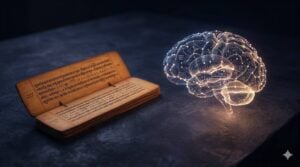
The relevance of Panini’s work to computer science did not end with the 1967 letter to the ACM. It has, if anything, accelerated in the era of artificial intelligence.
Because of its well defined syntax and extensively well codified rules, many researchers have made attempts to codify Panini’s sutras as computer programs to analyse Sanskrit texts. Research published by computer scientists at institutions including the Indian Institute of Technology Delhi and Jadavpur University in Kolkata has used Panini’s rule structure directly to build natural language processing systems, including neural networks for splitting Sanskrit compound words and automatic root extraction tools that have been successfully extended to derive grammatical roots in Bengali with 98 percent accuracy.
Recent academic research into the token efficiency of Sanskrit for large language models has found that the formalised grammar of 4000 sutras by Panini encodes syntactic and semantic information through deterministic morphology rather than word ordering, offering distinct computational advantages, since a Sanskrit trained model can theoretically achieve higher accuracy with fewer parameters by learning Panini’s generative rules rather than needing to memorise patterns the way models trained on English typically must.
This is the genuinely extraordinary part of the Panini story for a modern audience. He is not merely a historical curiosity who happens to resemble a programmer if you squint. His actual rule structure is being directly studied today by artificial intelligence researchers looking for more computationally efficient ways to build the language models that power tools like ChatGPT. The eight chapters he composed near the banks of the Indus river twenty five centuries ago are an active subject of contemporary computer science research.
Why Today’s AI Models Still Struggle With What Panini Solved Twenty Five Centuries Ago
The clearest modern proof that Panini’s grammar still poses a genuine challenge to artificial intelligence comes from researchers actively trying, and partly failing, to teach today’s large language models Sanskrit.
A 2025 study from PES University in Bengaluru and Amazon Web Services set out to test how well existing large language models actually handle Sanskrit, and the results make the case for Panini’s continued relevance better than any abstract argument could. When one model was asked to generate text about knowledge, it produced a single sentence about breath, then repeated that same sentence verbatim eleven times in a row rather than developing a coherent thought. When another model was asked about the word guru, meaning teacher, it confused the word with Gurunathdevgad, an unrelated place name, and generated an entire fabricated story about an ancient monastery instead of answering the actual question. The researchers concluded that Sanskrit’s rich, rule governed grammar continues to defeat the statistical pattern matching that modern AI models rely on, and proposed building a new model directly on Panini’s own sutras instead, arguing that a system trained on his 4,000 rules would handle Sanskrit more reliably than today’s general purpose language models manage to.
This challenge, and the opportunity it represents, is the subject of active, well funded research well beyond a single study. The Sanskrit Heritage Initiative at Inria in France has spent years building morphological analysis and sandhi segmentation tools directly from Panini’s grammar. The Anusaaraka Project at the International Institute of Information Technology in Hyderabad applies his rule based system to machine translation across Indian languages. The Paninian Grammar for South Asian Languages project at the University of Chicago has gone further still, attempting to extend his two and a half thousand year old framework to describe languages he never could have known existed.
Twenty five centuries after Panini finished the Ashtadhyayi, researchers are still discovering that the cleanest way to teach a machine Sanskrit, and perhaps eventually other languages, is to go back and use his rules directly, not build something new from scratch.
Did Panini Really Invent the World’s First Programming Language

Panini did not write a programming language in the sense of a system designed to instruct a machine. He wrote a grammar designed to define and preserve a human language with complete mechanical precision. The honest and complete claim is not that Panini wrote code, but that he invented the formal structural techniques, generative rules, metarules, recursive transformation and symbolic classification, that programming languages would independently rediscover twenty five centuries later when computer scientists needed exactly the same tools to define artificial languages for machines.
This distinction matters and an honest account should not blur it. Panini was solving the problem of describing Sanskrit, an existing human language spoken for centuries before he was born, with total rigour. Backus and Naur were solving the problem of inventing a new artificial language, ALGOL, for a machine that had no language of its own. The problems are different. But the formal toolkit required to solve both problems with complete precision turned out to be, almost exactly, the same toolkit. Panini built it first, by an enormous margin, and built it to describe something far more complex than any computer language has ever needed to be, a complete living human language with all its richness and exception and nuance.
The reason the title world’s first programmer endures, and the reason computer scientists themselves coined the term Panini Backus Form rather than dismissing the comparison, is that the structural achievement, a complete formal system of generative rules capable of producing infinite correct output from a finite rule set, is genuinely the same kind of achievement, regardless of whether the output was meant for a human mouth or a computer processor.
Experience Panini’s World With 5 Senses Tours
Panini, Takshashila and the Ancient Indian Intellectual Tradition

Panini’s birthplace near Attock on the Indus river places him within reach of one of the most historically significant intellectual landscapes in the ancient world. He is likely to have taught at the university of Taxila, an ancient centre of learning at the crossroads of the main trade routes of Asia, that also produced Chanakya, the political strategist behind the Mauryan Empire, and Charaka, the father of systematic Indian medicine.
The university provided instruction in almost any subject, religious or secular, from the Vedas to mathematics and medicine, even to astrology and archery, drawing students from Babylonia, Greece, Arabia and China. That a single ancient institution in this region may have shaped the man who invented formal grammar theory, the man who wrote the foundational treatise of political science, and the man who systematised Indian medicine is one of the most remarkable concentrations of intellectual legacy connected to any single location in world history.
The intellectual tradition Panini founded did not end with him. His grammar shaped the entire subsequent development of Sanskrit literature, philosophy and science for the next two and a half thousand years. Every Sanskrit text that came after him, the philosophical treatises of the Vaisheshika and Vedanta schools, the mathematical works of Aryabhata and Brahmagupta, the medical compendiums of Charaka and Sushruta, was written in a language whose grammar Panini had fixed with such precision that it has remained essentially unchanged for two and a half millennia.
Connecting Panini to the Complete Ancient Indian Science Heritage Trail
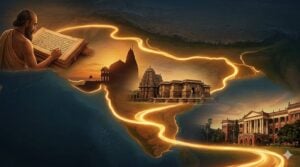
Panini’s story belongs alongside the other figures in India’s extraordinary ancient scientific tradition, Kanada, who proposed atomic theory in Gujarat 2600 years before John Dalton, the mathematicians of Karnataka who described calculus five centuries before Newton, and the Bengali scientists of Kolkata whose work on bosons and stellar spectroscopy reshaped twentieth century physics.
Panini’s birthplace near the Indus river sits within reach of one of the most historically layered regions accessible from northern India, and the broader story he belongs to stretches across the entire subcontinent. Our Delhi tours connect international travellers to the closest major gateway for exploring this ancient intellectual landscape, while our complete heritage circuit brings Panini’s rule based method into direct conversation with the other towering figures of India’s scientific tradition. Travellers who want to walk the same ground that shaped Kanada’s atomic theory can extend their journey to our Ahmedabad tours in Gujarat, while the calculus described by Karnataka’s mathematicians five centuries before Newton comes alive through our Karnataka tours, and the quantum physics breakthroughs of Kolkata’s Bengali scientists are covered in full through our Kolkata tours. Every one of these destinations is woven into our complete India tours, each one private, expert guided and customised to the specific intellectual or scientific thread a traveller wants to follow.
Our tours across India connect international travellers to the complete landscape of this extraordinary intellectual tradition with expert cultural guides who bring the full depth of each story to life at the destinations connected to it.
5 Senses Tours is recognised by India’s Ministry of Tourism, winner of the Tripadvisor Travellers Choice Award and the Outlook Responsible Tourism Award. Every tour is private, expert guided and completely customised for your group.
Talk to a 5 Senses Tours expert about experiencing the complete ancient Indian science and intellectual heritage trail today.
Contact 5 Senses Tours to begin planning your ancient India heritage journey today

To learn about Kanada, the ancient Indian Philosopher who discovered the Atom 2600 years before Dalton, visit Kanada’s discovery of Atom. You might also like to read about Madhavam who invented Calculus 200 years before Newton. Visit Madhava of Sangamagrama.
Leave a Reply