
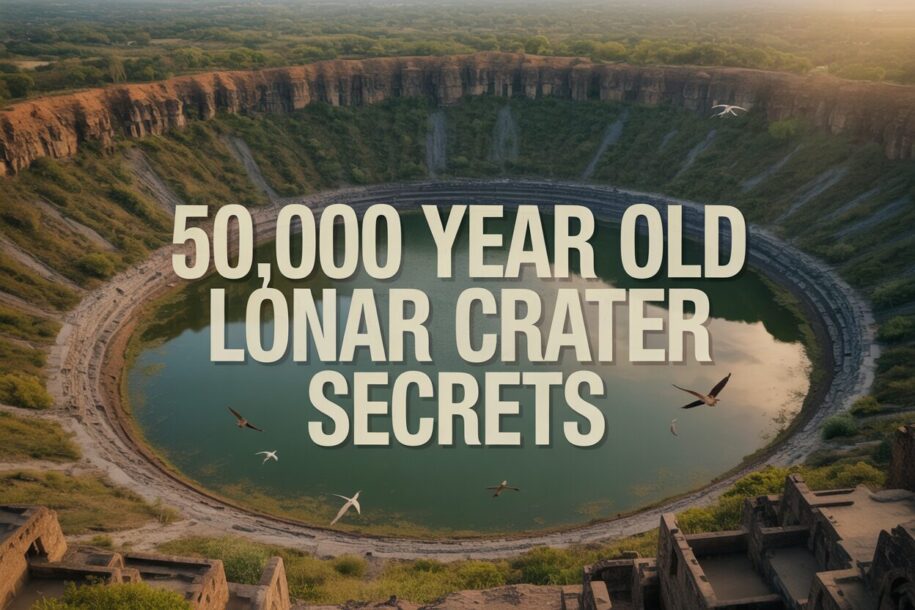
The Lonar Crater in Maharashtra holds secrets that have fascinated scientists and travelers for decades. This remarkable meteorite impact crater India was formed around 50000 years ago when a massive meteorite slammed into the Earth, creating one of the world’s most unique geological formations.
This guide is perfect for geology enthusiasts, nature lovers, curious travelers, and anyone drawn to India’s hidden scientific treasures who want to understand what makes Lonar Lake Maharashtra so extraordinary.
We’ll dive into the mind-blowing science behind how this basaltic impact crater came to be and why geologists still debate some of its formation details. You’ll also discover the incredible ancient crater ecosystem that thrives here today – from rare birds and plants that have adapted to the crater’s alkaline environment to the archaeological mysteries that suggest this spot has been significant to humans for thousands of years. Finally, we’ll share practical tips for planning your own visit to experience this geological wonder firsthand.
Get ready to explore one of India’s most underrated natural marvels that combines cutting-edge science with breathtaking beauty.
For a private guided tour of Lonar crater, visit 50000 year old crater walk.
Discover the Geological Marvel of Lonar Crater’s Formation
Understanding the meteorite impact that created this unique circular lake
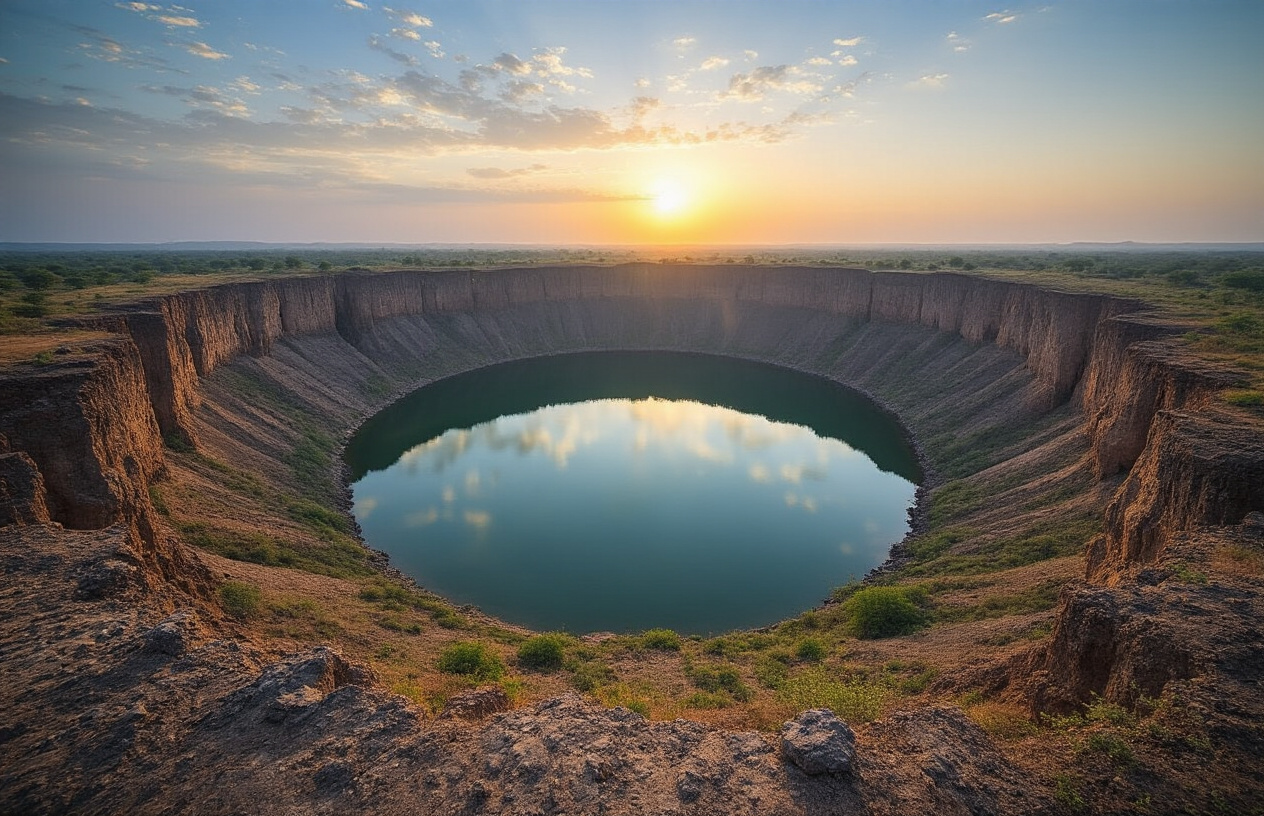
The Lonar Crater stands as one of Earth’s most spectacular natural phenomena, formed around 50,000 years ago when a massive meteorite slammed into the Deccan Plateau of Maharashtra, India. This cosmic collision released energy equivalent to millions of atomic bombs, vaporizing rock and creating a perfectly circular depression that measures 1.8 kilometers across and 150 meters deep.
What makes this meteorite impact crater India so extraordinary is its pristine condition. Unlike most ancient craters that have been eroded or filled with sediment, Lonar Crater has maintained its original bowl shape with remarkable clarity. The impact created a rim that rises 20-25 meters above the surrounding terrain, forming a natural amphitheater that has protected the crater’s interior for millennia.
The meteorite itself was likely composed of chondrite material, traveling at speeds exceeding 90,000 kilometers per hour before impact. The collision generated temperatures reaching 24,000°C – twice as hot as the sun’s surface – instantly melting the target rock and creating unique mineral formations. This violent birth gave rise to Lonar Lake Maharashtra, a saline-alkaline water body that fills the crater floor, creating an ecosystem unlike anywhere else on the planet.
Scientists have determined the crater’s age through various dating methods, including studying the magnetic properties of impact glass and analyzing the distribution of shocked minerals throughout the structure.
Exploring the rare basaltic rock formation found nowhere else on Earth
The geological foundation of this 50000 year old crater tells a story that began millions of years before the meteorite impact. The Lonar Crater sits atop the Deccan Traps, vast basaltic lava flows that covered much of western India around 66 million years ago. This basaltic impact crater represents the only known hypervelocity impact structure formed entirely in basaltic rock on Earth.
When the meteorite struck, it encountered layers of basalt that had cooled and solidified eons earlier. The impact transformed these ordinary volcanic rocks into extraordinary materials through a process called shock metamorphism. The collision created maskelynite, a rare glass formed from shocked plagioclase feldspar, found in only a handful of impact sites worldwide.
The crater walls reveal a fascinating cross-section of the Deccan basalts, displaying distinct lava flows that can be traced around the entire rim. Each layer represents a separate volcanic episode, creating a natural geological timeline that researchers use to understand the region’s ancient history. The impact also generated breccias – fragmented rock pieces cemented together by impact melt – that contain a mix of original basalt and newly formed minerals.
Most intriguingly, the crater contains lechatelierite, a natural glass formed when sand grains melt under extreme pressure and temperature. This material, combined with impact diamonds and other shock minerals, provides concrete evidence of the meteorite’s tremendous energy release during the collision event.
Analyzing the crater’s perfect preservation over millennia
The exceptional preservation of Lonar Crater results from a perfect storm of geological and climatic factors that have protected it from the destructive forces that typically erase impact structures over time. The crater’s location in the stable Deccan Plateau means it hasn’t experienced significant tectonic activity since its formation, avoiding the earthquakes and crustal movements that can distort crater shapes.
The semi-arid climate of Maharashtra has played a crucial role in preservation. Limited rainfall prevents excessive erosion, while the absence of major rivers nearby means no large-scale sediment deposition has filled the crater. The basaltic bedrock itself contributes to this preservation – its resistance to chemical weathering has maintained the structural integrity of the crater walls and rim.
The crater’s circular rim remains nearly perfect, with only minor modifications from wind erosion and occasional landslides. The original impact features, including terraced walls and a raised rim, stay clearly visible after 50,000 years. This preservation allows scientists to study impact mechanics in unprecedented detail, making Lonar Crater a natural laboratory for understanding planetary impact processes.
Seasonal changes in the crater have actually aided preservation. During monsoons, Lonar Lake expands, protecting the crater floor from erosion. In dry seasons, salt deposits form natural protective crusts on exposed surfaces. This cyclical process has created a self-preserving system that maintains the crater’s pristine condition while supporting its unique ecosystem.
Human activity in recent centuries has posed new challenges, but conservation efforts now protect this geological marvel for future generations to study and appreciate.
Uncover the Scientific Mysteries Hidden in Lonar’s Ecosystem
Examining the alkaline and saline water properties that baffle researchers
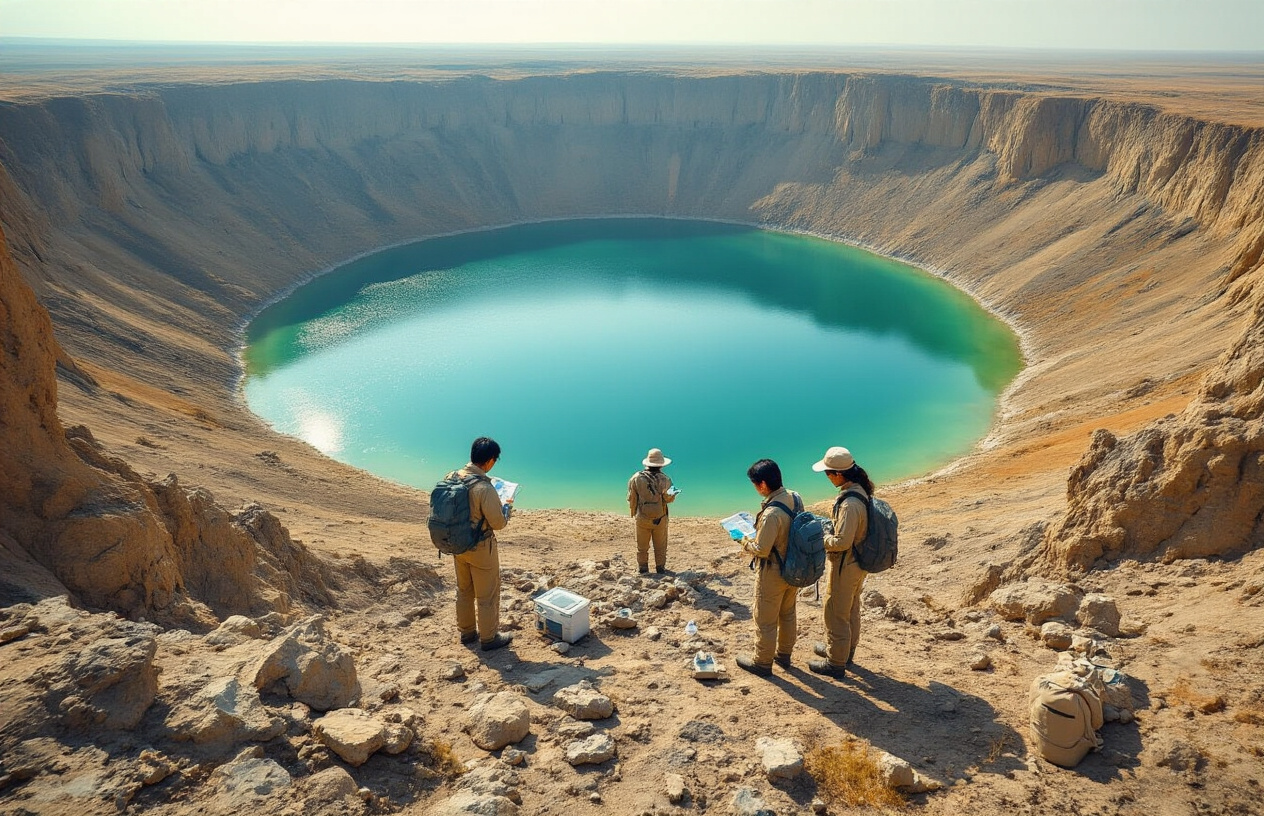
The waters of Lonar Crater present one of nature’s most puzzling chemical mysteries. This ancient crater lake maintains an extraordinary pH level ranging from 10 to 11, making it one of the most alkaline natural water bodies on Earth. What makes this even more remarkable is the simultaneous presence of high salinity levels that create a unique dual-extreme environment rarely found anywhere else on the planet.
Scientists struggle to explain how these extreme alkaline and saline conditions developed and continue to persist in the Lonar Lake Maharashtra ecosystem. The water’s chemical composition defies typical geological expectations for impact craters. Most meteorite impact sites don’t exhibit such dramatic water chemistry changes, yet Lonar’s waters remain consistently alkaline despite receiving fresh rainwater influx during monsoon seasons.
The lake’s salinity fluctuates dramatically with seasonal changes, sometimes reaching levels comparable to ocean water. During dry periods, salt crystals form along the shoreline, creating a stark white contrast against the dark basaltic crater walls. This chemical cocktail creates an environment so extreme that it serves as an analog for studying potential life conditions on Mars and other planetary bodies.
Investigating the unique microbial life thriving in extreme conditions
Deep within Lonar’s harsh waters lives a thriving community of extremophile microorganisms that have adapted to conditions most life forms cannot survive. These microscopic inhabitants include halophilic (salt-loving) bacteria, alkaliphilic microbes that flourish in high pH environments, and various archaea species that represent some of Earth’s most ancient life forms.
Recent microbiological studies have identified over 150 different bacterial species in the crater lake ecosystem, many of which are entirely new to science. These organisms have developed unique metabolic pathways to process nutrients in an environment where conventional biological processes would fail. Some species exhibit remarkable color-changing properties, contributing to the lake’s seasonal shifts from green to pink to red hues.
The microbial mats found along the crater’s edges contain organisms that produce specialized enzymes capable of breaking down complex organic compounds in highly alkaline conditions. These discoveries have significant implications for biotechnology applications and astrobiology research, as scientists study how life might exist in similarly extreme environments on other worlds.
Understanding why compasses fail to work properly around the crater
Navigation around Lonar Crater becomes mysteriously unreliable due to significant magnetic anomalies that interfere with compass readings. Standard magnetic compasses experience deflections of up to 15-20 degrees from true north when used near the crater rim, creating navigation challenges for researchers and visitors alike.
The magnetic interference stems from the meteorite impact that created this 50000 year old crater. When the cosmic projectile struck Earth’s surface, the tremendous energy and heat generated during impact altered the magnetic properties of the surrounding basaltic rock. This process, called shock magnetization, created localized magnetic fields that persist today.
GPS devices work normally in the area, but traditional magnetic navigation tools become unreliable within approximately 500 meters of the crater edge. Local guides have learned to rely on landmark navigation and modern electronic devices rather than conventional compasses when leading groups around the crater.
Studying the unusual magnetic properties of the crater floor
The basaltic impact crater floor exhibits magnetic anomalies that continue to intrigue geophysicists and planetary scientists. Detailed magnetometer surveys reveal complex magnetic signatures across different sections of the crater, with some areas showing reversed polarity compared to Earth’s normal magnetic field orientation.
These magnetic variations result from the intense shock metamorphism that occurred during the original meteorite impact. The collision generated temperatures exceeding 2000°C and pressures millions of times greater than atmospheric pressure, fundamentally altering the magnetic mineral structure within the target rock. Iron-bearing minerals in the basalt underwent rapid cooling and recrystallization, locking in magnetic orientations that differ from the regional magnetic field.
Research teams use specialized magnetometers to map these subsurface magnetic patterns, which provide valuable data about impact crater formation processes. The magnetic signature data helps scientists understand similar impact structures on other planetary bodies and contributes to the broader field of planetary geology research.
Explore the Rich Archaeological Evidence Surrounding the Crater
Discovering ancient temples carved into the crater walls
The Lonar archaeological site holds treasures that date back centuries, with ancient temples carved directly into the crater’s basaltic walls. These remarkable structures showcase the incredible craftsmanship of early Indian civilizations who chose this unique geological formation as their sacred space. The most prominent among these is the Daitya Sudan Temple, dedicated to Lord Vishnu, which sits majestically on the crater’s rim.
What makes these temples extraordinary is how architects worked with the natural basaltic rock formation, carving intricate sculptures and chambers directly into the meteorite impact crater’s walls. The Kamalja Devi Temple and Shankar Ganesh Temple represent different periods of construction, showing how various dynasties valued this sacred space over time. These religious structures demonstrate advanced engineering skills, as builders had to account for the crater’s unique geological properties.
The temples feature elaborate carvings depicting Hindu deities, mythological scenes, and geometric patterns that have weathered thousands of years. Many of these structures show influences from different architectural periods, including Chalukyan and Yadava styles, making the Lonar Crater a living museum of Indian temple architecture.
Understanding the historical significance of human settlements
Human settlements around the 50000 year old crater reveal fascinating patterns of continuous habitation. Archaeological evidence shows that people have been drawn to this meteorite impact crater India for millennia, likely attracted by the lake’s water source and the crater’s natural defensive properties.
The settlement patterns reveal strategic placement around the crater’s rim, where communities could access the lake while maintaining elevated positions for protection. These early inhabitants understood the crater’s unique ecosystem and built their lives around its natural rhythms. The settlements show evidence of agricultural activities, with terraced farming techniques adapted to the crater’s sloped terrain.
Trade routes passing through this region brought different cultures into contact, creating a melting pot of traditions that influenced local customs and architecture. The strategic location of these settlements along ancient trade paths explains the diversity of artifacts and architectural styles found throughout the area. Communities here developed specialized knowledge about living in harmony with the crater’s unique ecosystem.
Examining artifacts that reveal 50,000 years of continuous habitation
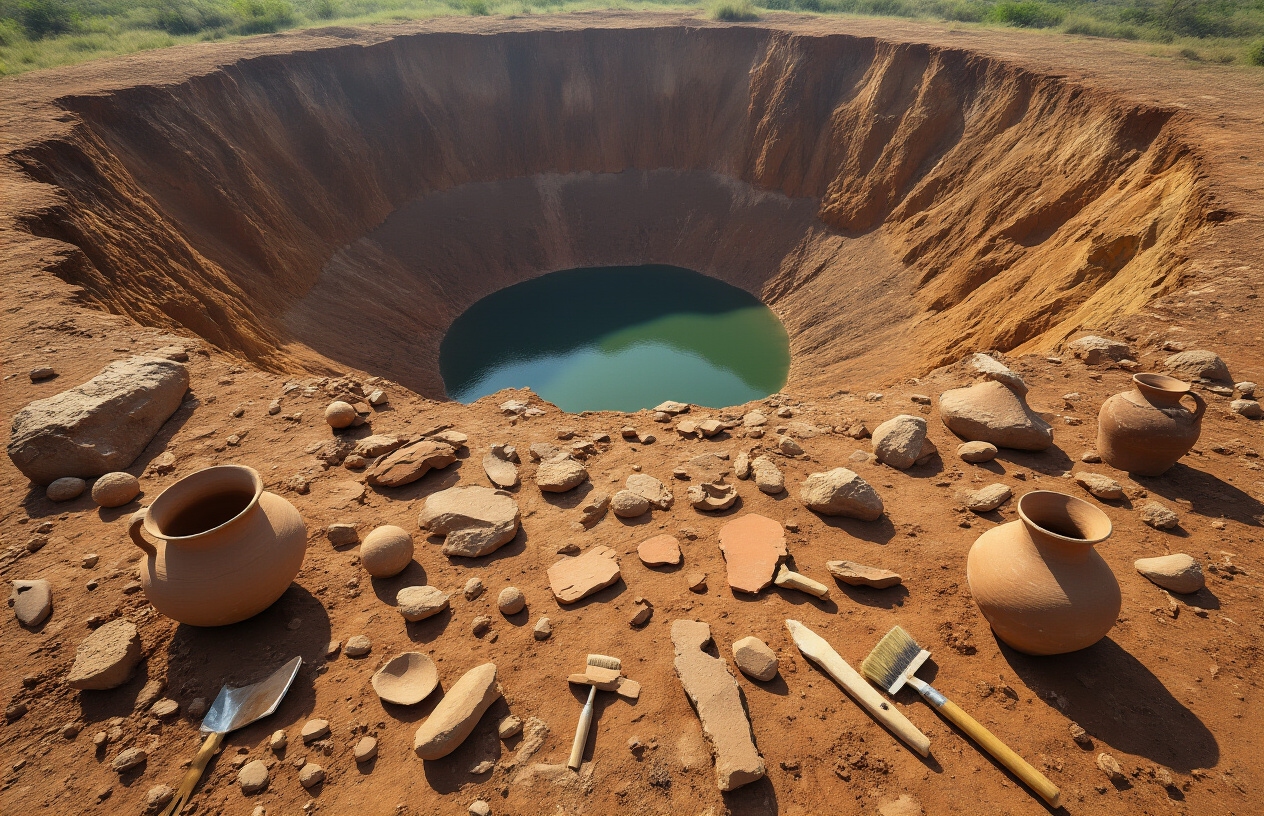
Archaeological excavations around Lonar Lake Maharashtra have uncovered layers of artifacts spanning enormous time periods. Stone tools, pottery fragments, and metal objects tell the story of technological advancement and cultural evolution in this unique location. The most ancient artifacts date back thousands of years, showing primitive stone-working techniques that gradually evolved into sophisticated metalworking.
Pottery shards reveal changing artistic styles and functional needs across different periods. Early ceramics show simple, utilitarian designs, while later pieces display elaborate decorations and advanced firing techniques. These artifacts indicate not just survival, but thriving communities that had time and resources for artistic expression.
Metal artifacts, including weapons, tools, and ornamental objects, demonstrate the progression from bronze to iron age technologies. Coins from different periods show the area’s integration into broader economic networks. Religious artifacts, including small sculptures and ritual objects, reveal the spiritual significance people attached to this crater throughout history.
The continuous layering of artifacts shows that despite changing empires and cultures, people consistently chose to live near this geological wonder. Each generation left their mark while respecting the sacred nature of the Lonar Crater, creating an archaeological record that spans human civilization in this remarkable location.
Learn About Lonar’s Rare Wildlife and Vegetation Adaptations
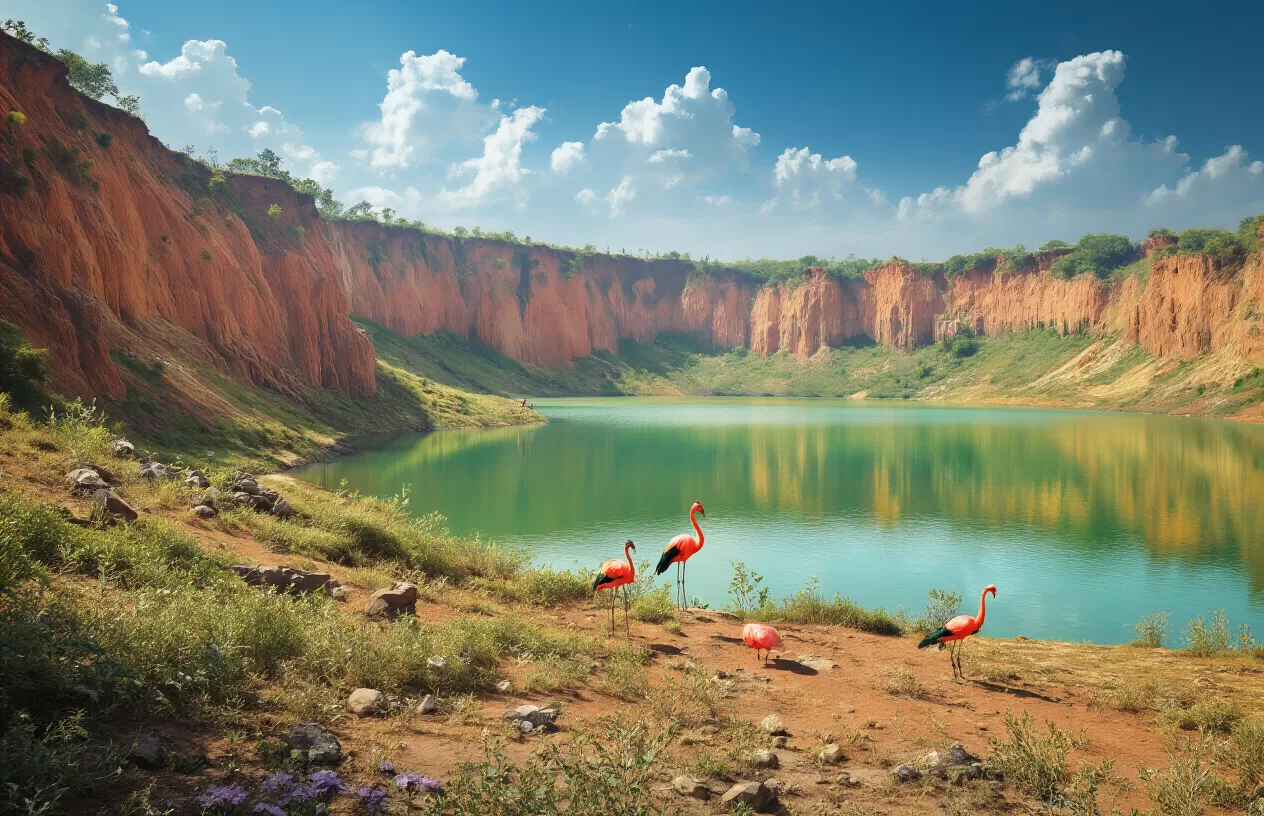
Observing Flamingos and Migratory Birds That Visit Seasonally
The Lonar Crater transforms into a birdwatcher’s paradise during migration seasons, particularly between October and March. Greater flamingos arrive in spectacular flocks, their pink plumage creating striking contrasts against the crater’s dark basaltic walls. These elegant birds are drawn to the lake’s unique alkaline conditions, which promote the growth of blue-green algae and small crustaceans that flamingos love to feed on.
Beyond flamingos, over 160 bird species call this ancient crater ecosystem home at various times throughout the year. Spot-billed pelicans glide gracefully over the water surface, while painted storks wade through shallow areas hunting for fish. The crater’s isolated nature creates perfect roosting and nesting conditions for various waterfowl, including brahmin ducks, red-crested pochards, and common teals.
During winter months, the diversity explodes as Siberian migrants join resident species. White-throated kingfishers flash their brilliant blue wings, and various species of sandpipers scurry along the muddy shorelines. The crater’s rim provides excellent vantage points for observing these seasonal visitors, with early morning and late afternoon offering the best viewing opportunities when bird activity peaks.
Identifying Plant Species That Have Adapted to Alkaline Soil Conditions
The Lonar Crater ecosystem supports remarkable plant life that has specifically adapted to highly alkaline soil conditions created by the meteorite impact crater’s unique geology. The pH levels around Lonar Lake range from 10 to 11, creating an environment where only specially adapted vegetation can survive.
Prosopis juliflora, commonly known as mesquite, dominates much of the crater floor. This hardy shrub thrives in alkaline conditions and provides crucial habitat for various wildlife species. Its deep root system helps it access water sources while tolerating the harsh chemical environment that would kill most other plants.
Salt-tolerant grasses like Sporobolus marginatus carpet large areas of the crater floor, creating unique grassland communities. These specialized grasses have developed mechanisms to excrete excess salts through their leaves, allowing them to flourish where other vegetation would quickly perish.
Along the crater rim, you’ll find Acacia nilotica trees that have adapted their root systems to cope with varying alkaline levels. The famous Dhatura plants grow wild here, their white trumpet-shaped flowers adding beauty to this harsh landscape. These plants contain alkaloids that help them survive in conditions that would stress ordinary vegetation.
Tamarind trees dot the landscape, their deep taproots reaching groundwater sources while their leaves have adapted to minimize water loss in this challenging environment.
Understanding How Wildlife Has Evolved in This Isolated Ecosystem
The Lonar Crater’s isolation has created a natural laboratory where wildlife has evolved unique adaptations over thousands of years. This meteorite impact crater in Maharashtra functions as an ecological island, allowing species to develop characteristics found nowhere else on Earth.
The crater’s alkaline environment has shaped evolutionary pressures unlike any other habitat in India. Small mammals like shrews and rodents have developed enhanced kidney functions to process the high mineral content in their water sources. Local populations of common species show subtle but significant differences from their counterparts in surrounding regions.
Reptiles within the crater demonstrate remarkable adaptations to the alkaline conditions. Several snake species have developed modified scale structures that better protect them from the harsh chemical environment. Lizards show enhanced salt gland functions, allowing them to excrete excess minerals absorbed from their prey and environment.
The crater’s unique hydrology creates seasonal variations that wildlife has learned to navigate. During monsoons, when the lake fills with fresh water, different species emerge and become active. As the water recedes and becomes increasingly alkaline, only the most adapted creatures remain active while others retreat to underground burrows or migrate to crater rim areas.
Insect communities show perhaps the most dramatic adaptations, with several species developing specialized digestive systems to process the alkaline plant matter that forms their primary food source.
Discovering Endemic Species Found Only in This Crater Environment
The ancient crater ecosystem harbors several endemic species that exist nowhere else on Earth, making Lonar Crater wildlife truly unique. These species have evolved in complete isolation, developing characteristics specifically suited to the crater’s extreme alkaline conditions.
Researchers have identified multiple endemic microorganisms living in Lonar Lake’s highly alkaline waters. These microscopic life forms include unique strains of bacteria and algae that have adapted to pH levels that would be lethal to most life forms. Some of these organisms are being studied by scientists worldwide for their potential applications in biotechnology and medicine.
The crater hosts endemic varieties of freshwater sponges that have evolved specialized filtering mechanisms to handle the high alkaline content. These sponges represent evolutionary adaptations spanning thousands of years, developing unique cellular structures that allow them to thrive in conditions that would dissolve ordinary sponge species.
Several endemic plant varieties exist within the crater boundaries, including unique subspecies of common Indian flora that have developed enhanced alkaline tolerance. These plants show modified root structures, altered leaf chemistry, and specialized water retention mechanisms that set them apart from their mainland relatives.
Among invertebrates, the crater shelters endemic species of water beetles and other aquatic insects that have evolved specialized digestive systems and protective outer shells. These creatures represent evolutionary marvels, perfectly adapted to an environment that existed long before human civilization began exploring this geological wonder.
Master the Best Ways to Experience and Visit Lonar Crater
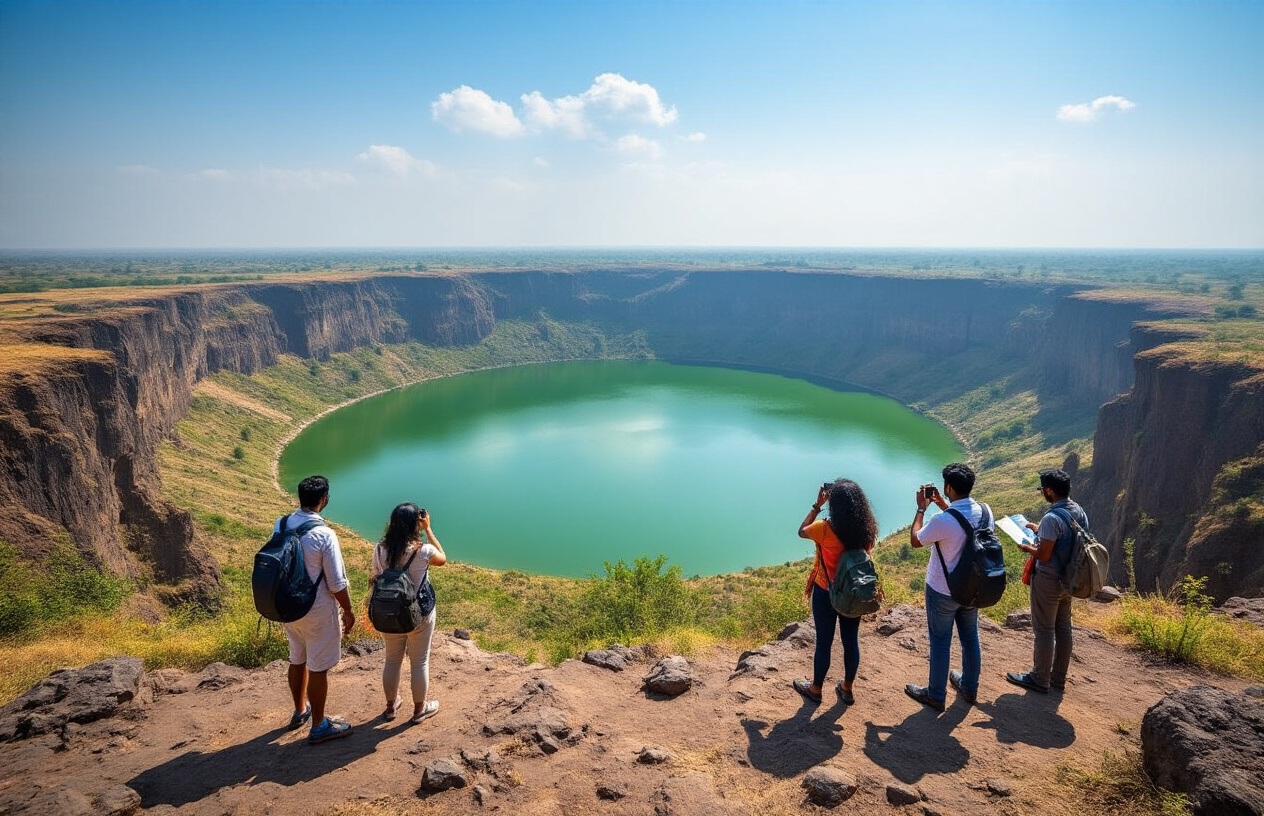
Planning your visit during optimal seasons for maximum exploration
The Lonar Crater visiting guide experts recommend timing your trip between October and March when temperatures drop to comfortable levels and rainfall remains minimal. During these cooler months, you can explore the 50000 year old crater without battling Maharashtra’s intense summer heat that often exceeds 40°C.
Winter months offer crystal-clear views of the Lonar Lake Maharashtra and its surrounding basaltic formations. The reduced water levels during this period expose more of the crater’s geological features, making it perfect for photography and detailed observation of the meteorite impact crater India structure.
Monsoon season (June to September) transforms the landscape dramatically but creates challenges for visitors. Heavy rains can make crater rim trails slippery and dangerous, while increased water levels may obscure some geological formation crater features. However, post-monsoon visits in October reveal lush vegetation and active wildlife around the ancient crater ecosystem.
Early morning visits between 6-9 AM provide the best lighting conditions and wildlife sightings. The Lonar Crater wildlife becomes most active during these hours, and you’ll avoid the harsh midday sun that can make exploration uncomfortable.
| Season | Best For | Challenges |
|---|---|---|
| Winter (Nov-Feb) | Photography, hiking, wildlife viewing | Occasional fog |
| Spring (Mar-May) | Clear skies, geological study | Increasing heat |
| Monsoon (Jun-Sep) | Lush landscapes, bird migration | Heavy rains, flooding |
Accessing guided tours that reveal scientific and historical insights
Guided toura are available through 5 Senses Tours which provide in-depth explanations of the crater’s formation process and ongoing research discoveries.
These tours also showcase ancient temple ruins and historical artifacts scattered around the crater rim. These guides possess generational knowledge passed down through families who have lived near the Lonar archaeological site for centuries, sharing stories and legends that complement scientific facts.
For a private guided tour of Lonar crater, visit 50000 year old crater walk.
Meteorite crater tourism packages often combine Lonar visits with nearby archaeological sites like Ellora Caves, creating comprehensive educational experiences. These multi-day tours include accommodation in heritage properties and meals featuring local specialties.
Please visit Tours from Aurangabad, for guided tour to AJanta, Ellora and lonar,
Understanding conservation efforts protecting this natural wonder
The Archaeological Survey of India maintains strict protection protocols for the crater and its surrounding areas, designating Lonar as a National Geo-heritage Monument. These regulations limit construction activities within a 5-kilometer radius and prohibit any mining or excavation without proper scientific authorization.
Water quality monitoring programs continuously assess the crater lake ecosystem health, tracking pH levels, mineral content, and microbial populations. Scientists regularly sample the highly alkaline waters to study extremophile bacteria that could provide insights into early life forms on Earth and potentially Mars.
Wildlife conservation efforts focus on protecting the diverse bird species that migrate through this unique ecosystem. The crater serves as a crucial stopover point for over 160 bird species, making habitat preservation essential for regional biodiversity.
Local community involvement plays a crucial role in conservation success. Village committees work alongside government agencies to prevent littering, unauthorized camping, and damage to geological formations. Educational programs in nearby schools teach children about the crater’s scientific importance and their role as guardians of this India geological wonder.
Recent initiatives include installing solar-powered surveillance systems around the crater rim and establishing waste management facilities that handle visitor impact without disturbing the delicate ecosystem balance. These efforts ensure future generations can continue studying and appreciating the Lonar Crater mysteries that have fascinated scientists for decades.
Restoration projects have successfully removed invasive plant species that threatened native vegetation, allowing original flora to recover and maintain the crater’s authentic ecosystem structure.
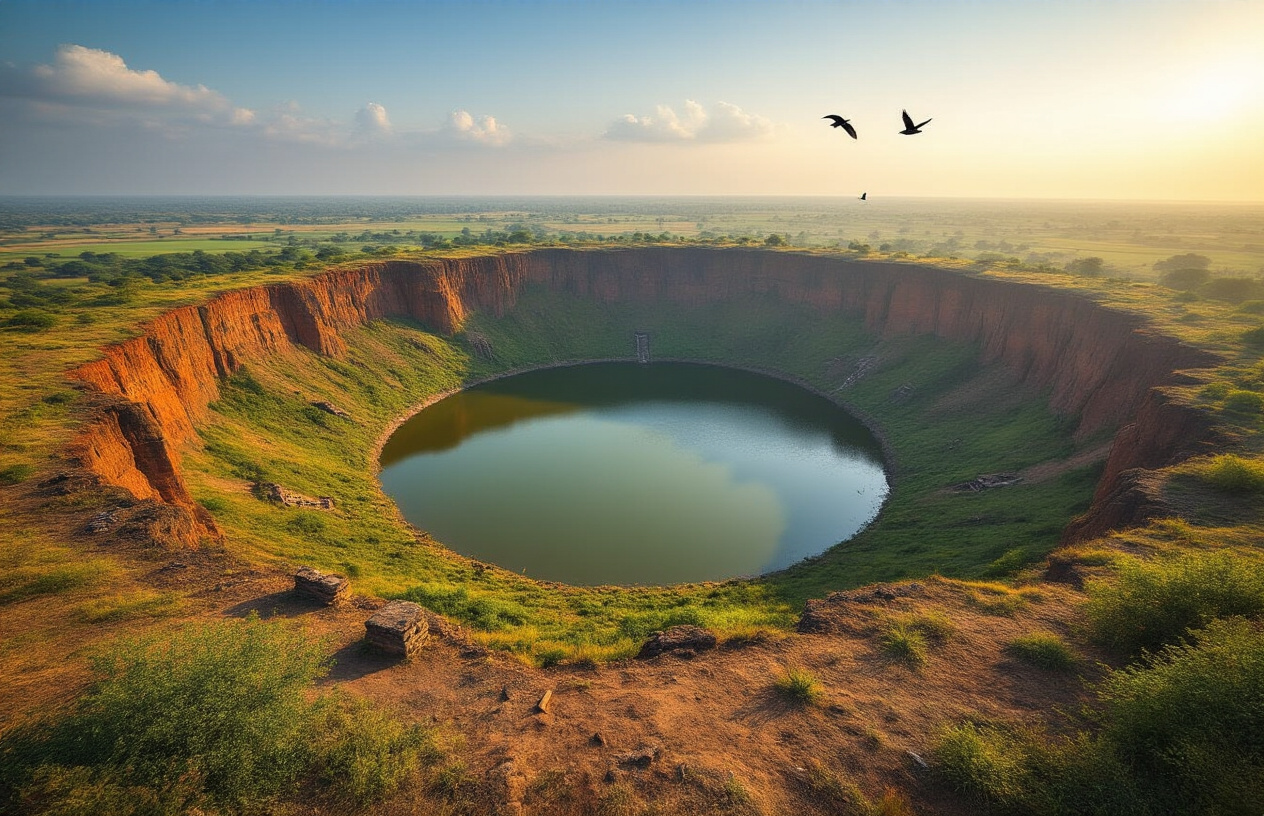
The Lonar Crater stands as one of Earth’s most remarkable natural wonders, packed with scientific treasures that continue to amaze researchers and visitors alike. From its explosive meteoric birth 50,000 years ago to the unique alkaline ecosystem that thrives within its walls today, this geological marvel offers insights into both our planet’s violent past and its incredible ability to adapt. The ancient temples scattered around the crater rim tell stories of human civilization, while the specialized plants and animals living in the salty lake showcase nature’s creative solutions to extreme environments.
Ready to witness this incredible slice of natural history for yourself? Plan your trip during the cooler months when wildlife is most active and the walking conditions are comfortable. Whether you’re drawn by the scientific mysteries, the archaeological wonders, or simply the breathtaking views, Lonar Crater promises an unforgettable experience that will leave you with a deeper appreciation for the powerful forces that have shaped our world.
For a private guided tour of Lonar crater, visit 50000 year old crater walk.
For touring India’s first world heritage visit Ajanta Caves for magnificent cave painting & for the world’s largest monolithic creation, visit Ellora Caves.
Visit 5 Senses Walks for immersive culture walks across India.
Leave a Reply